
Rent vs Buy Calculator
Should you rent or buy a home? Compare monthly costs, total spending, equity, investments, and projected wealth.
What You Enter
Home Details
Rent Details
Ownership & Upfront Costs
Growth Assumptions
Time Horizon & Taxes
Results Dashboard
Projected recommendation
BUY
Buy is projected to create approximately $191,389 more net worth after 30 years under the assumptions entered.
Decision confidence
63%
Scenario-based estimate
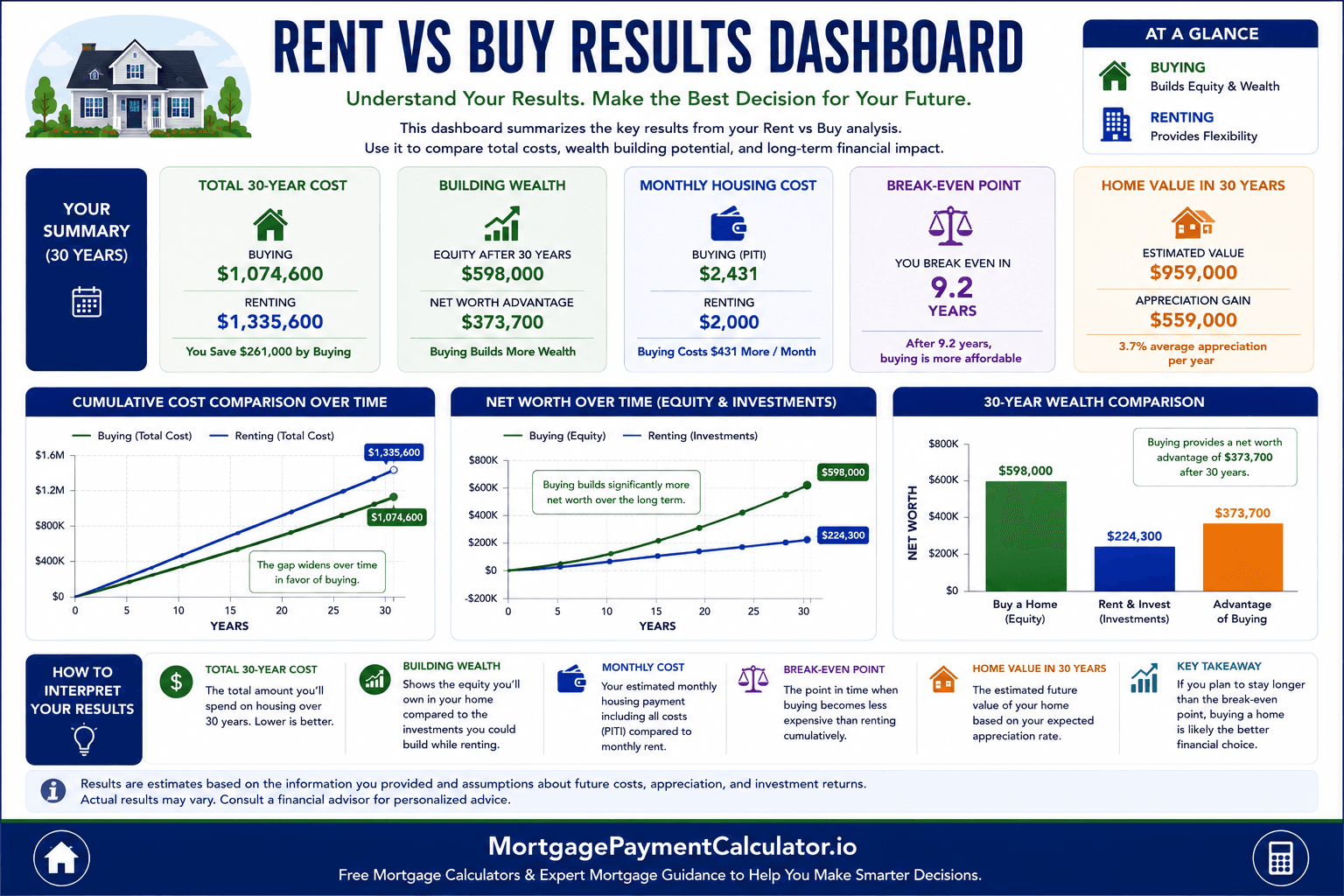
Total 30-year cost
Buy $1,386,066
Rent $1,286,026
Renting costs $100,040 less
Projected wealth
Buy $1,026,732
Rent $835,343
Buy advantage $191,389
First-month housing cost
Buy $2,854
Rent $2,220
Buying costs $634 more / month
Break-even point
8y 5m
Owner net worth catches renter net worth
Time horizon: 30 years
Home value in 30 years
$1,092,268
Equity $1,092,268
3.0% assumed appreciation
Scenario assumptions
Compare a conservative, expected, or optimistic set of growth assumptions.
Cumulative Cost Comparison Over Time
Compare estimated housing cash outlays for buying and renting.
Net Worth Over Time
Compare owner net proceeds with renter investments.
Home Value, Loan Balance, and Equity
See how the home's value and mortgage balance affect owner equity.
30-Year Wealth Comparison
Compare the projected end-of-horizon outcomes.
Buying Summary
Renting Summary
What affects this decision most?
The ranking below shows how selected changes affect the buy advantage.
How to interpret your result
A lower cumulative cost means less total housing spending. A higher net worth means more projected wealth after accounting for equity, selling costs, and investments.
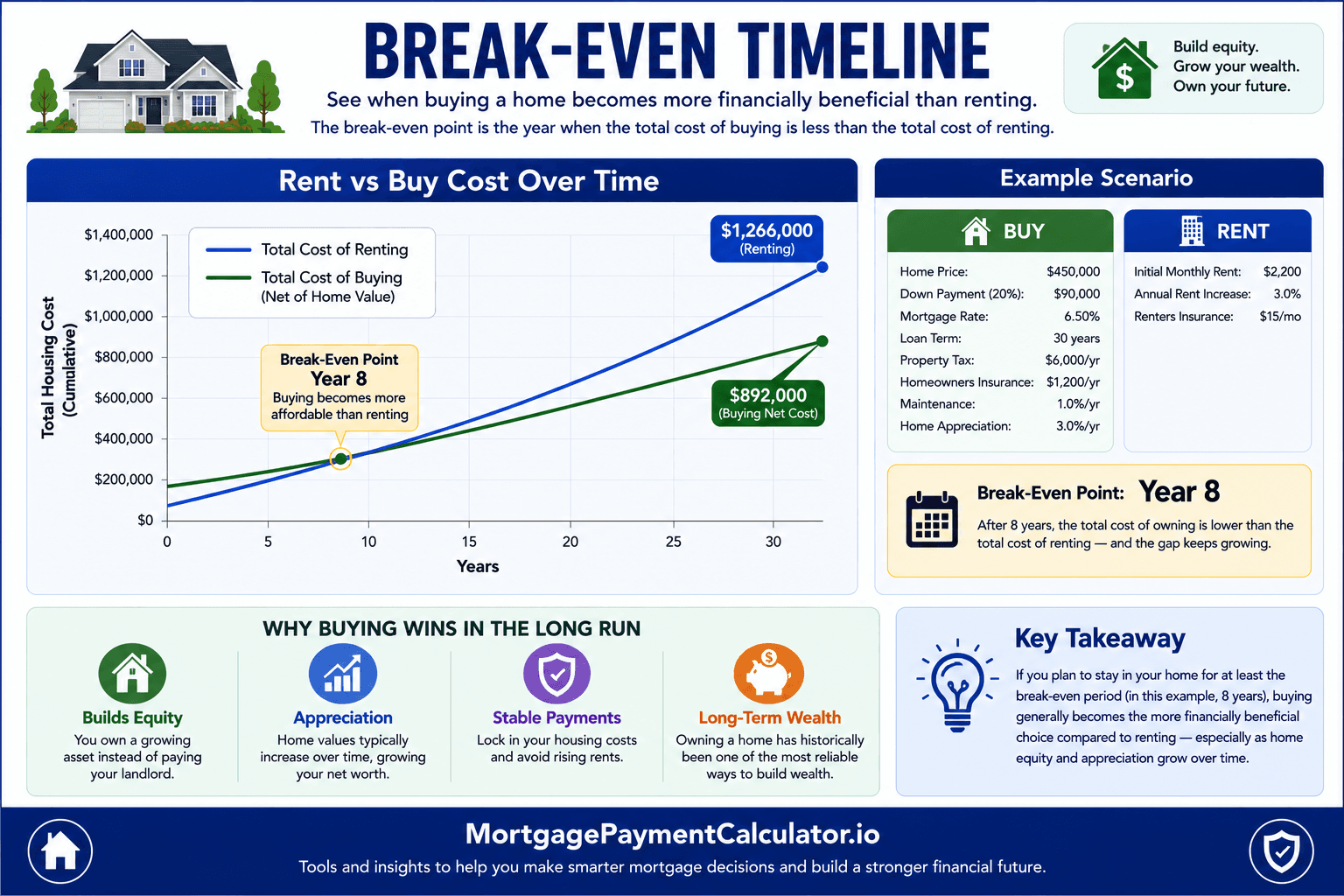
The break-even point estimates when buying first catches renting in projected net worth. Staying beyond that point generally strengthens the financial case for buying.
Adjust the time horizon, appreciation, investment return, rent growth, and mortgage rate to test how sensitive the recommendation is.
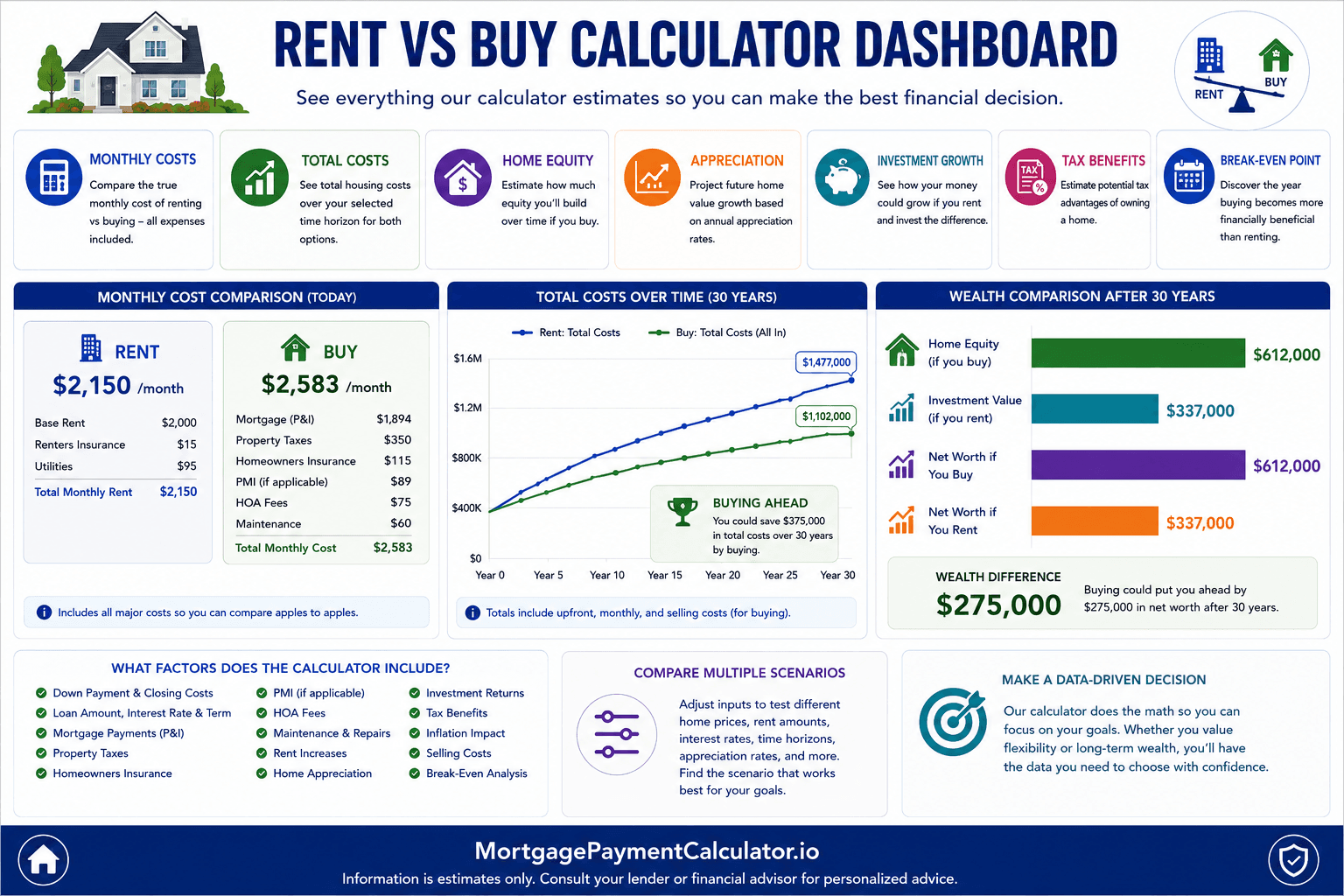
Deciding between renting and buying a home is a significant financial choice that impacts your long-term wealth. At MortgagePaymentCalculator.io, our Rent vs Buy Calculator provides a comprehensive analysis to help you compare the true costs of each option. By estimating monthly mortgage payments, potential rent increases, property taxes, maintenance costs, and more, you can make an informed decision. Explore various scenarios with data-driven insights to determine the best strategy for your financial future and build confidence in your homeownership journey.
Brief Overview
Choosing between renting and buying a home is a significant financial decision that impacts your wealth in the long run. At MortgagePaymentCalculator.io, our Rent vs Buy Calculator helps assess the true costs of both options, factoring in monthly payments, tax benefits, maintenance expenses, and property appreciation. By analyzing various scenarios, you can weigh the stability of a mortgage against potential rent increases and explore how each choice aligns with your financial goals. This comprehensive analysis empowers you to make informed decisions, ensuring your housing choice effectively contributes to long-term financial growth.
Key Highlights
- MortgagePaymentCalculator.io's Rent vs Buy Calculator analyzes costs like mortgage, rent, taxes, insurance, maintenance, and appreciation for informed housing decisions.
- Long-term wealth comparison of renting and buying, factoring in appreciation, equity, investment growth, and tax benefits to align with financial goals.
- Calculate initial buying costs such as down payments and closing fees against fluctuating rent for long-term affordability.
- Mortgage payment breakdown includes principal, interest, taxes, and insurance; essential for budgeting future home-related financial commitments.
- Impact of maintenance and potential property appreciation on overall wealth and comparing against liquid investments when renting.
Understanding the Basics of Renting vs Buying
Deciding whether to rent or buy a home is a crucial step in making your best financial decision. Each option comes with its unique set of benefits and challenges. Renting offers flexibility and often seems cheaper in the short term, but it doesn't contribute to building equity or appreciation. It's important to use a rent vs buy calculator to evaluate the true costs involved. While renting may appear cheaper upfront with no maintenance or property tax responsibilities, you're missing out on potential long-term gains that homeownership offers. Buying a home can be more cost-effective in the long run due to the appreciation of real estate and equity accumulation. Understanding your financial capabilities, the potential home price, and the local housing market will all play a role in your decision. By carefully analyzing these factors, you can determine if buying a home aligns with your financial goals or if continuing to rent is the better choice. Ultimately, assessing these basics will guide you towards a sound housing decision.
Key Factors to Consider in Housing Decisions
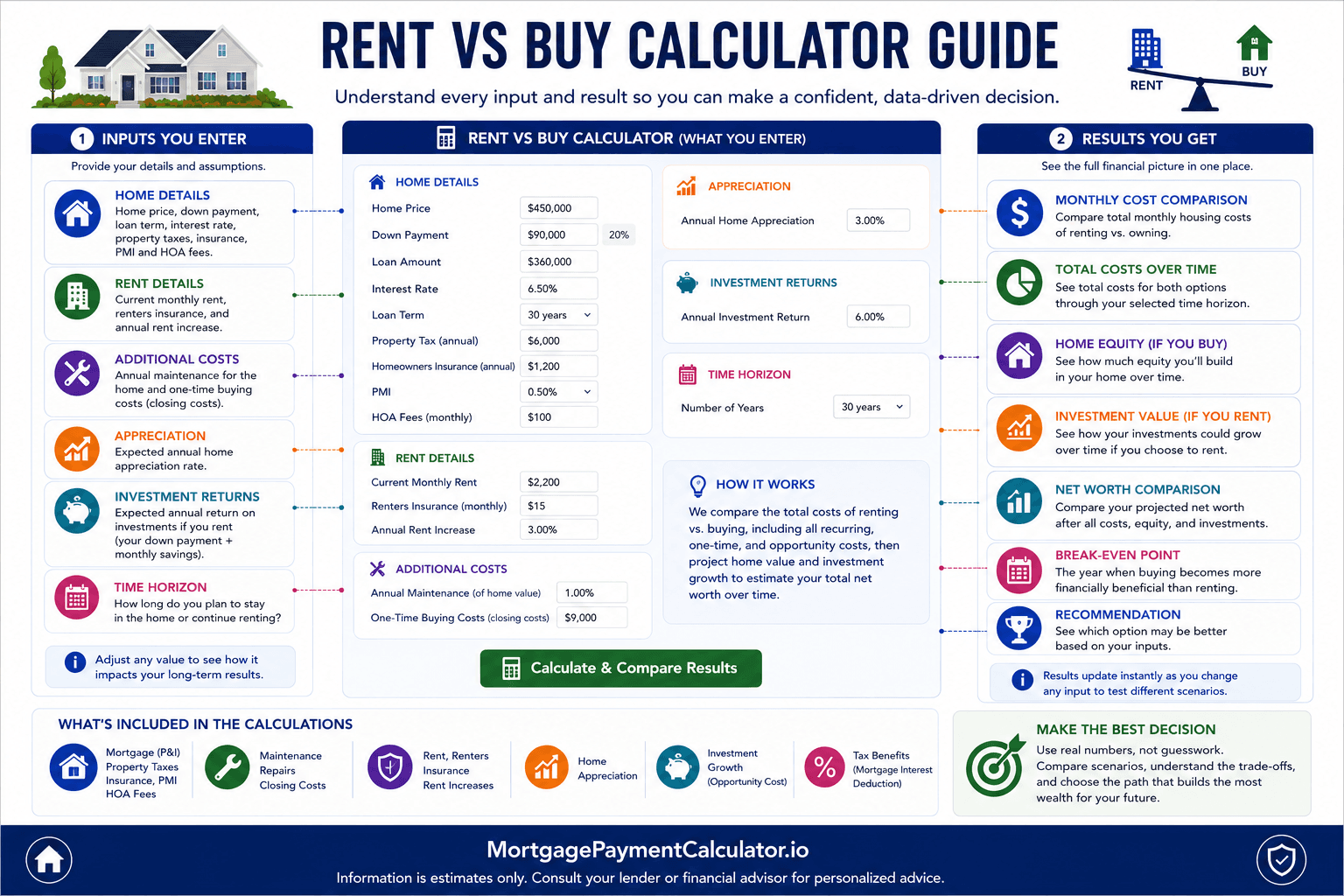
When deciding between renting and buying a home, several key factors need careful consideration. Evaluating opportunity costs is crucial; renting might free up cash for investments, while purchasing a property can build equity over time. Current mortgage rates heavily influence the cost of a mortgage, making timing a vital element. Consulting with a real estate agent who understands market trends can offer valuable insights. Your credit score determines the mortgage terms you'll qualify for, affecting monthly payments. Additionally, the interest rates you're offered will impact long-term payments. Consider the financial commitment required for both options. Buying a home involves upfront costs, such as down payments and closing fees, while renting generally requires a security deposit and first month's rent. Compare these costs against potential property appreciation and rental increases. Renters don’t need to worry about maintenance costs, while homeowners must budget for ongoing repairs. A thorough understanding of these factors will guide your decision, ensuring your choice aligns with your financial goals and lifestyle aspirations.
Assessing the Financial Implications of Rent and Mortgage
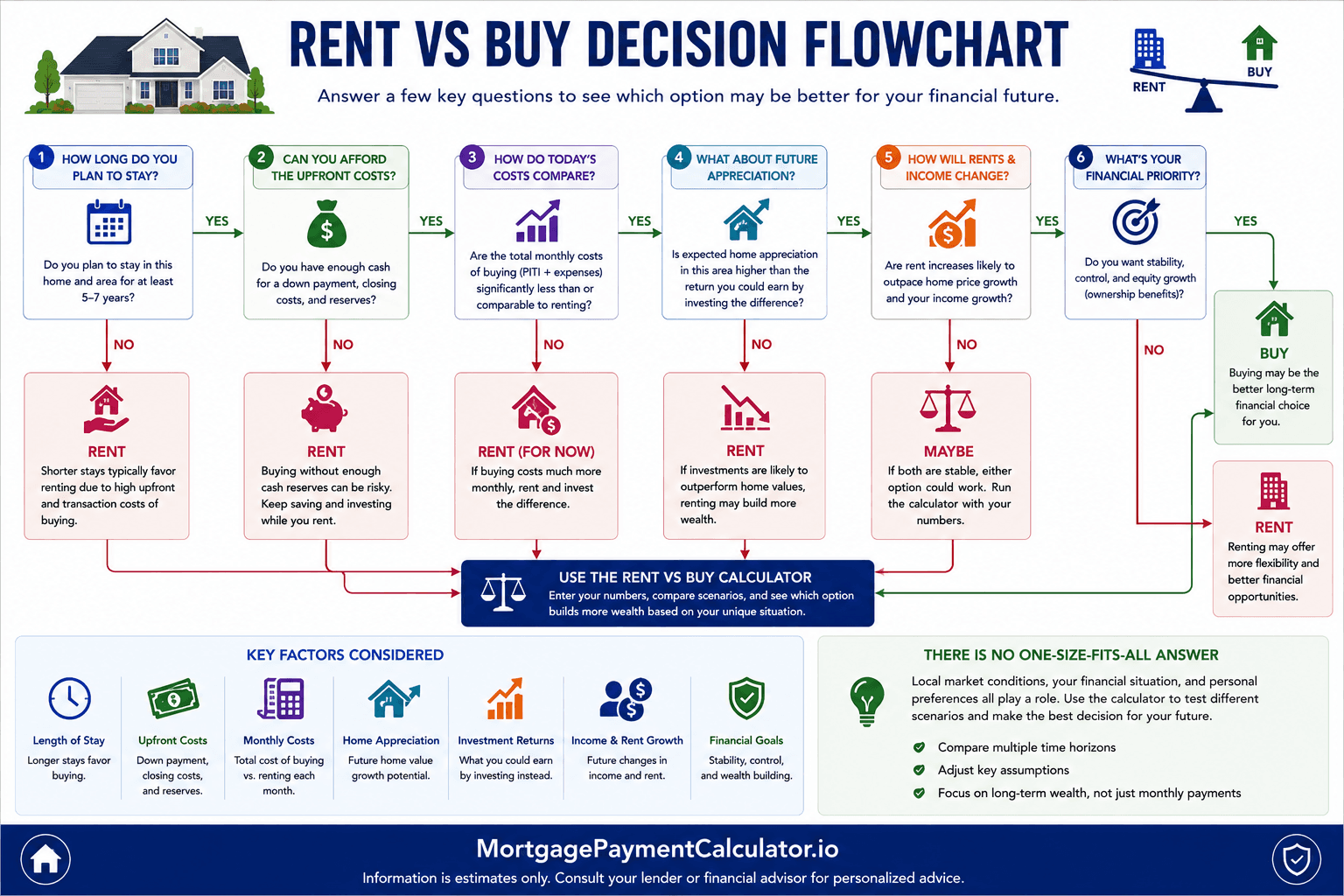
When navigating the complex world of housing decisions, using a rent vs buy calculator is crucial to assess the financial implications of both renting and owning a home. This tool analyzes factors like mortgage rates, the overall loan amount, and monthly interest payments. For renters, it accounts for potential rent increases over time. By considering the nuances of your financial landscape, you can gain clarity on whether homeownership aligns with your long-term goals. The calculator estimates key figures such as property taxes, home maintenance expenses, and the eventual appreciation value of your property, providing insights into how much wealth you could accumulate. Additionally, it takes into account possible tax benefits when choosing to buy a home. Comparing this to the potential investment growth you might achieve by renting and investing savings elsewhere helps demystify which scenario might yield greater returns on investment over time. Ultimately, understanding the broader monetary impact, through precise calculations, of both options empowers you to make an informed choice regarding a mortgage and future financial security.
Estimating Monthly Payments and Initial Costs
Estimating monthly payments and initial costs is crucial when deciding between renting and buying a home. Our calculator simplifies this process by providing an accurate comparison of these important financial factors. The monthly payment for a mortgage often includes the loan principal, interest, property taxes, and insurance. Calculating this amount is essential for potential buyers to understand their ongoing financial commitments. Additionally, initial costs such as down payments, closing fees, and moving expenses play a significant role in the home-buying decision. Our tool helps compare these factors against rental payments, which generally consist of just the rent amount but can fluctuate due to annual rent increases. Such fluctuations highlight the importance of considering long-term affordability. By using the calculator, you can assess whether the stable expenditure of a mortgage or the often-variable costs of renting aligns better with your financial goals. Understanding these dynamics is key to determining which option might provide greater financial security and help build wealth over time. Trust MortgagePaymentCalculator.io to guide you through this complex decision-making process.
Calculating Your Monthly Payment When Buying a Home
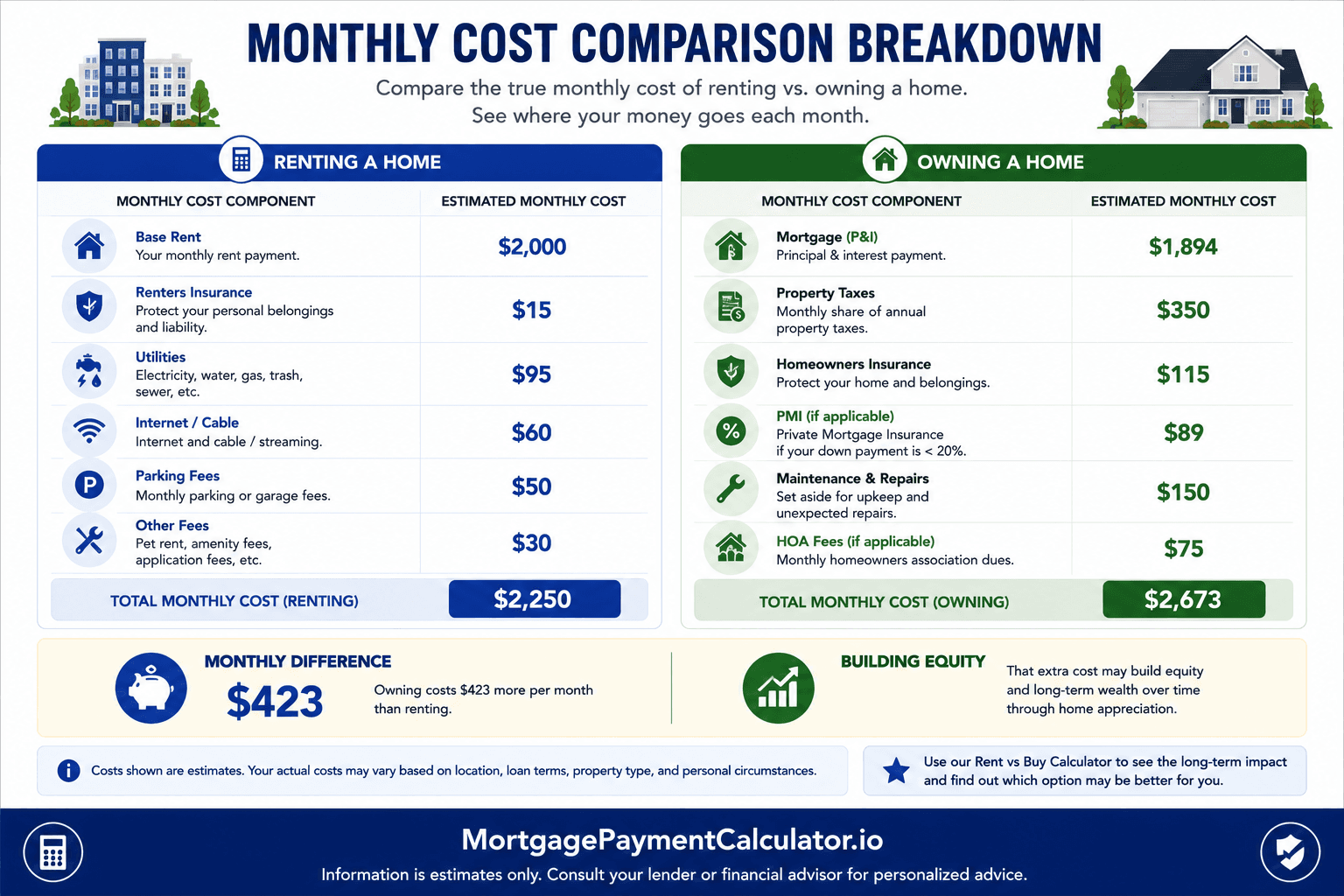
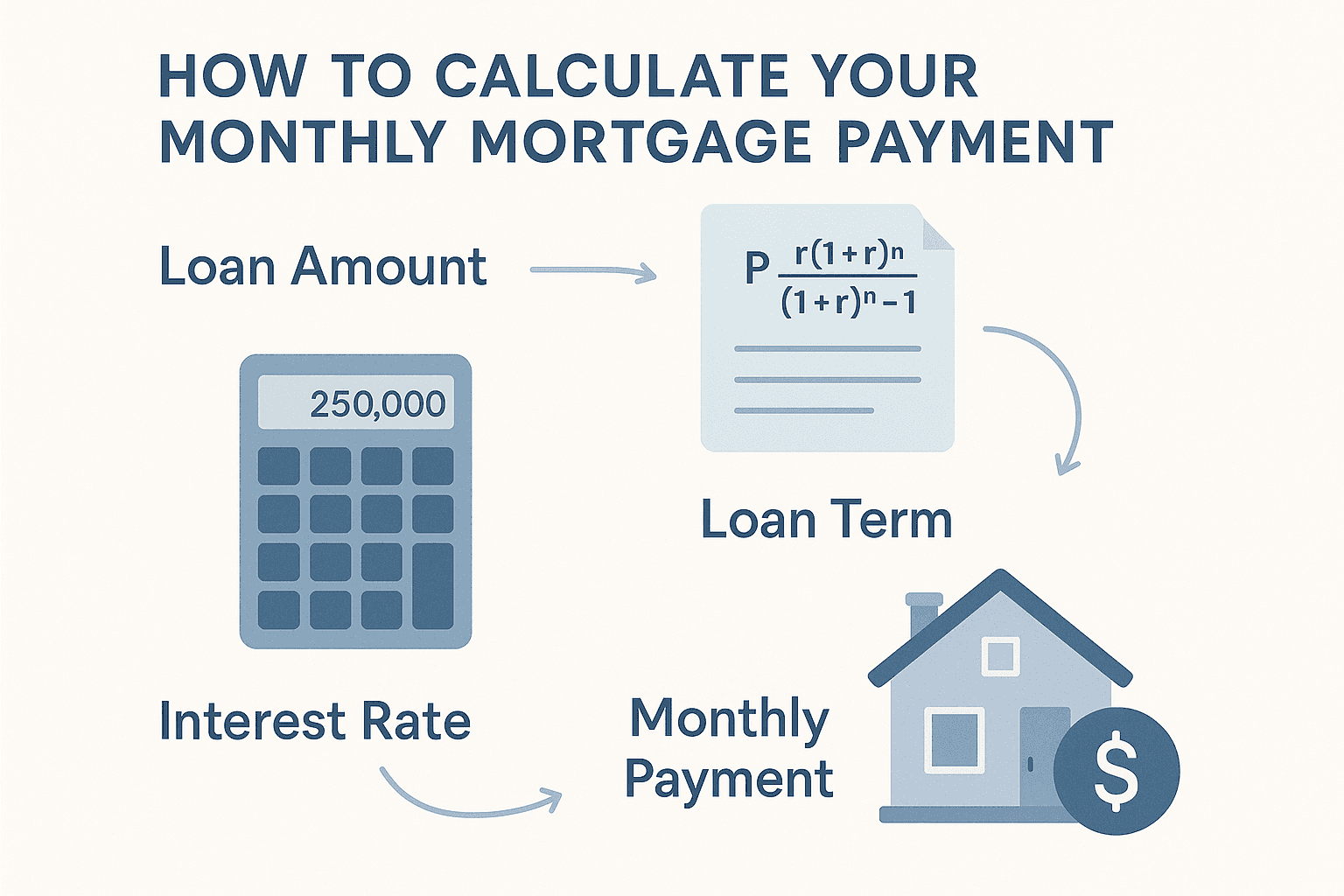
When considering buying a home, calculating your monthly payment is crucial for making a sound financial decision. Utilizing a buy calculator becomes indispensable in this process as it takes into account various factors like the loan amount and interest rate. The calculator helps you understand how much you’ll need to allocate each month to comfortably manage your mortgage. A reliable calculator simplifies this by breaking down your monthly payment into principal and interest components, allowing you to compare it effectively against current rent payments. Remember, the buy calculator doesn’t just stop at monthly payments; it considers additional costs like property taxes and homeowners insurance, giving you a comprehensive view of your financial commitment. This clarity paves the way for more strategic decision-making. At MortgagePaymentCalculator.io, our rent vs buy calculator is designed to help you evaluate the financial implications of owning versus renting by calculating your prospective monthly payments with precision. Let’s ensure you’re better equipped to assess the amount you’ll need when buying a home to make your best financial decision confidently.
How Closing Costs Influence Your Decision to Buy
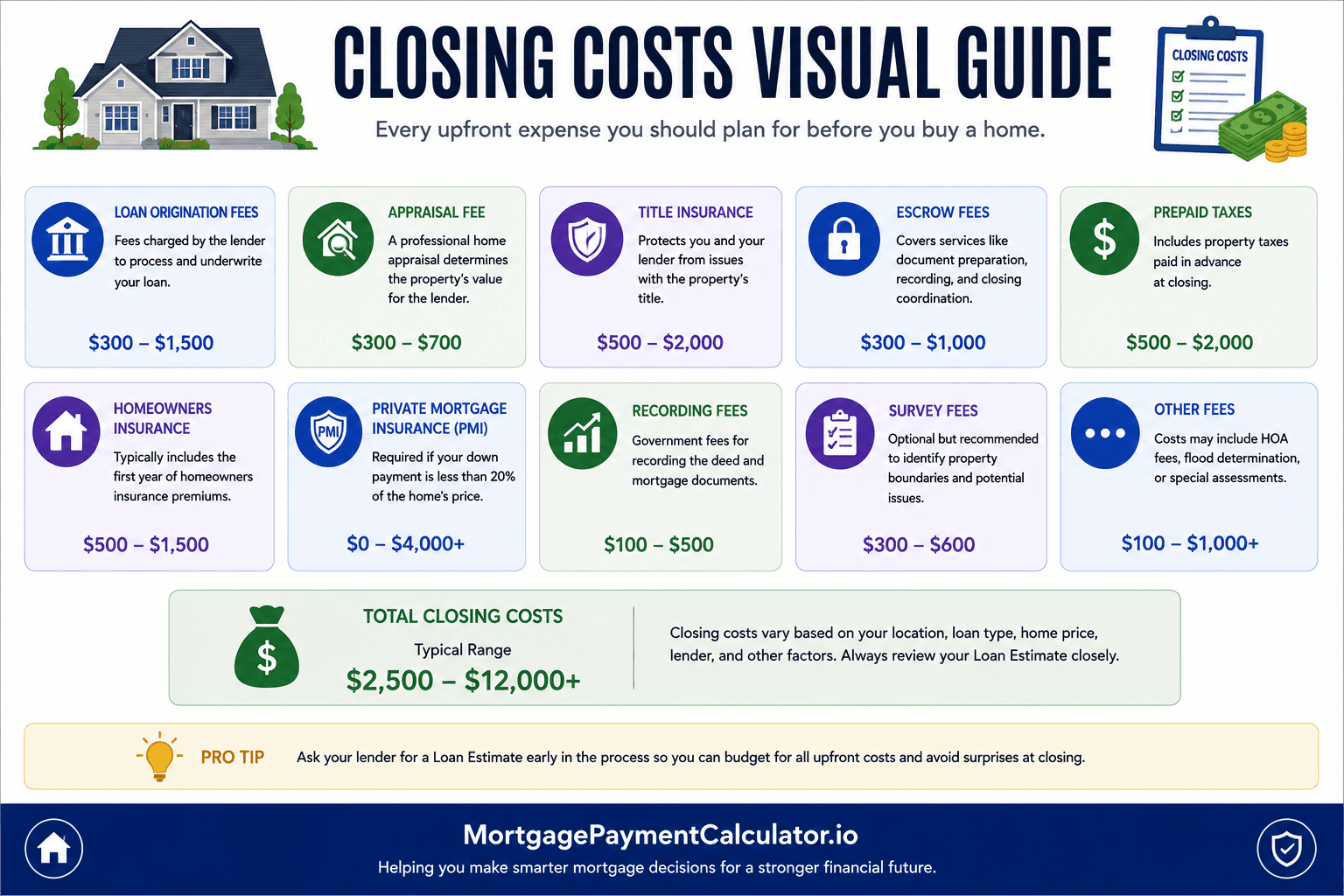
When considering whether to rent or buy, understanding how closing costs influence your decision to buy can be crucial. Closing costs are expenses over and above the home price that buyers typically incur to complete a real estate transaction. These can include fees for property taxes, appraisal, and inspection, as well as title insurance. Typically, closing costs range from 2% to 5% of the home price, meaning they can significantly affect your overall home buying budget. For many, these costs can make buying a home seem less attractive, especially if upfront funds are limited. It’s essential to compare these with the expenses linked to renting. While renters usually avoid closing costs and property taxes, they’re subject to rent increases and miss out on potential equity and appreciation advantages. With our Rent vs Buy Calculator at MortgagePaymentCalculator.io, you can accurately assess how closing costs play into the big picture of homeownership versus renting. This insight ensures you’re making an informed decision tailored to your financial situation and long-term wealth goals.
The Long-Term Financial Impact: Equity and Appreciation
In the journey to make your best financial decision when contemplating buying a home versus continuing to rent, understanding the long-term financial impact of equity and appreciation is crucial. Over the years, homeownership allows you to build equity, a significant advantage compared to rental agreements. As you pay down your mortgage, your equity increases, which can be a powerful financial asset. Moreover, appreciation often plays a key role in increasing your home’s value. Even if the rate of appreciation varies across markets, historically, property values tend to rise over time, adding to your home’s worth. Buying a home can leverage these aspects by securing a stable monthly payment rate contrasted with potential rental increases. By thoroughly evaluating your years of investment into a property, you will see how equity and appreciation can substantially impact your wealth. Using reliable tools like the MortgagePaymentCalculator.io’s Rent vs Buy Calculator can help you visualize these long-term benefits as you navigate the complex decision of renting versus buying, ensuring you make informed and strategic choices.
| Financial Factor | Description | Long-term Impact | Comparison to Renting |
|---|---|---|---|
| Equity | The value of the home owned outright by the homeowner, built over time through mortgage payments. | Potentially increases personal net worth and financial security as loan is paid down. | Renting does not build equity, all payments are for occupancy only. |
| Appreciation | The increase in a home’s market value over time, influenced by location, market trends, and home improvements. | Can substantially enhance the homeowner’s asset value, leading to profitable resale. | Renters do not benefit from property value increases, only landlords do. |
This table provides a clear comparison and overview of how homeownership, through equity and appreciation, can significantly influence long-term wealth creation, highlighting the differences from renting.
How Home Equity Builds Wealth Over the Years
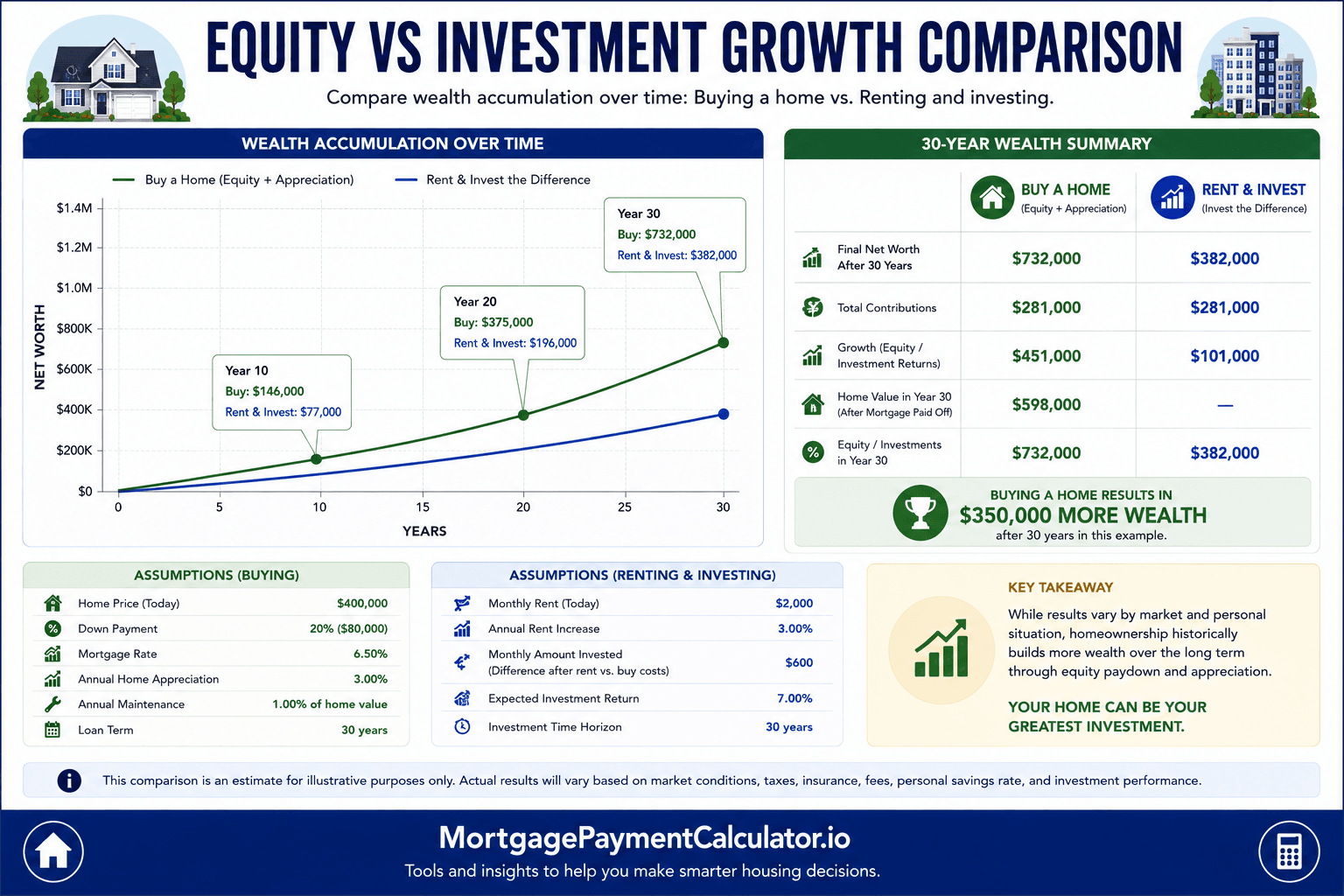
Understanding how home equity builds wealth over the years is essential for anyone considering the financial implications of buying a home. When you choose buying over renting, your mortgage payments contribute to ownership, gradually increasing your home equity. This equity represents the portion of the property you truly own, and over the years, it can become a substantial financial asset. As your home appreciates, the value of your equity increases, further enhancing your wealth. This long-term return on investment can be significant, offering financial security and potential for further gains. Unlike renting, where payments don’t build equity, buying a home allows you to leverage mortgage payments into wealth creation. Over time, owning a home can serve as a foundation for building wealth, providing returns through both equity accumulation and property appreciation. At MortgagePaymentCalculator.io, we simplify these complexities by providing a detailed analysis of how equity and appreciation can impact your finances, helping you make an informed decision on whether buying aligns with your financial goals.
Predicting Property Appreciation and Its Benefits
Understanding how property appreciation affects your financial outlook is crucial when deciding between renting and buying a home. By accurately predicting appreciation rates, you can assess the long-term benefits of home buying. A home's rising value over time can significantly enhance your equity, contributing positively to your overall wealth. This appreciation, combined with a stable interest rate on your mortgage, makes buying a sound investment. On the other hand, renting doesn't offer the same level of financial appreciation benefits, as monthly payments go toward someone else's mortgage interest and property appreciation. By using MortgagePaymentCalculator.io, you can simulate various scenarios and see firsthand how appreciation impacts your financial goals and helps you make your best financial decision. Consider external factors like the local market and economic trends, which greatly influence property appreciation rates. By integrating these insights, you'll be better equipped to choose between renting and buying, making the most informed decision that aligns with your long-term financial strategy.
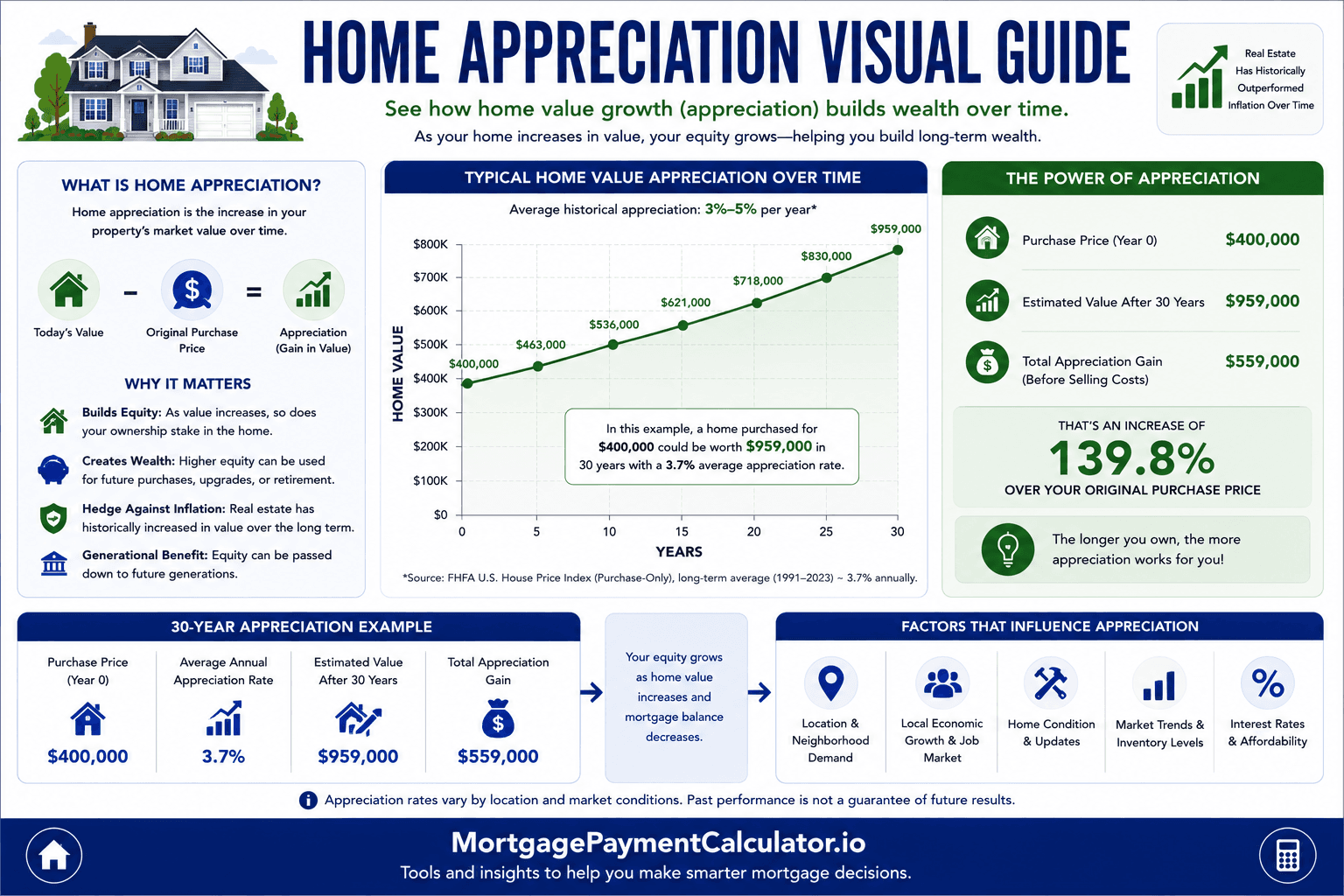
Comparing Additional Costs: Maintenance and Investment Returns
When deciding between renting and buying, it's crucial to compare additional costs like maintenance and investment returns. Maintenance is an ongoing expense for homeowners and can affect your recurring costs significantly. On the other hand, renters often sidestep these expenses, as landlords typically handle maintenance tasks. This cost difference plays a pivotal role when using our rent vs buy calculator to make an informed decision. Another factor in this decision-making process is investment growth. Buying a home can build wealth through appreciation and equity, leveraging your financial investment over time. However, by renting, you might have the option to invest elsewhere, potentially yielding higher returns. Evaluating these opportunity costs is necessary to understand their long-term financial impact. Our calculator provides an in-depth analysis of these elements, helping you weigh recurring maintenance costs against potential investment returns. Explore different scenarios to see how homeownership's investment growth compares with alternative investment opportunities, ensuring you make the best financial decision for your future. By considering all these factors, evaluate if renting or buying better suits your financial goals.
The Hidden Costs of Maintenance When Owning a Home
When buying a home, it's important to consider not just the home price, but also the hidden costs like maintenance that can impact your finances over time. Maintenance costs can vary significantly depending on the property's age, location, and condition. From roof repairs to plumbing fixes, these costs are often unpredictable and can add up quickly. In addition to maintenance, homeowners also face expenses such as homeowners insurance and property taxes, which can increase over the years. Although property taxes and insurance are expected costs, the maintenance aspect remains one of the most unpredictable financial burdens of owning a home. It’s crucial for potential homebuyers to factor these hidden costs into their budgets to avoid financial strain. Using a tool like the Rent vs Buy Calculator from MortgagePaymentCalculator.io can provide a comprehensive assessment, accounting for all costs associated with homeownership. This enables first-time buyers to make a well-informed decision, weighing these additional costs against potential equity and appreciation benefits. Ultimately, understanding these costs helps you make an educated buying decision and ensure long-term financial stability.
Here are some practical ways to manage and plan for hidden maintenance costs effectively:
- Set aside a dedicated budget for home maintenance expenses each month.
- Regularly inspect and perform basic repairs to avoid costly long-term damages.
- Invest in quality materials and services that offer greater durability.
- Stay informed about local property tax changes and insurance updates.
- Explore home warranty plans to cover unexpected repairs.
- Use financial tools and apps for efficient expense tracking and budgeting.
- Communicate with neighbors about shared maintenance issues for cost-effective solutions.
Implementing these strategies can significantly ease the financial impact of home maintenance.
Investment Growth: Renting vs. Homeownership
When evaluating the financial implications of renting versus buying, it’s essential to consider investment growth as a critical component. Renting often allows for more liquid cash on hand, which can be directed toward investments yielding a return. However, the recurring costs associated with renting, such as rising rent prices, may limit overall savings potential. On the other hand, homeownership involves recurring costs like property taxes, insurance costs, and maintenance, all of which factor into your monthly budget. Homeownership can potentially offer greater investment growth through property appreciation. As homes may increase in value over time, owners can build equity, effectively utilizing their home as a financial asset. Unlike renting, buying a home means you’re paying towards owning an asset instead of just covering temporary living expenses. Insurance costs play a role in both scenarios, but as a homeowner, you benefit from equity accumulation, transforming regular mortgage payments into long-term investment growth. Deciding between renting and homeownership impacts your financial future, making it crucial to weigh all factors carefully.
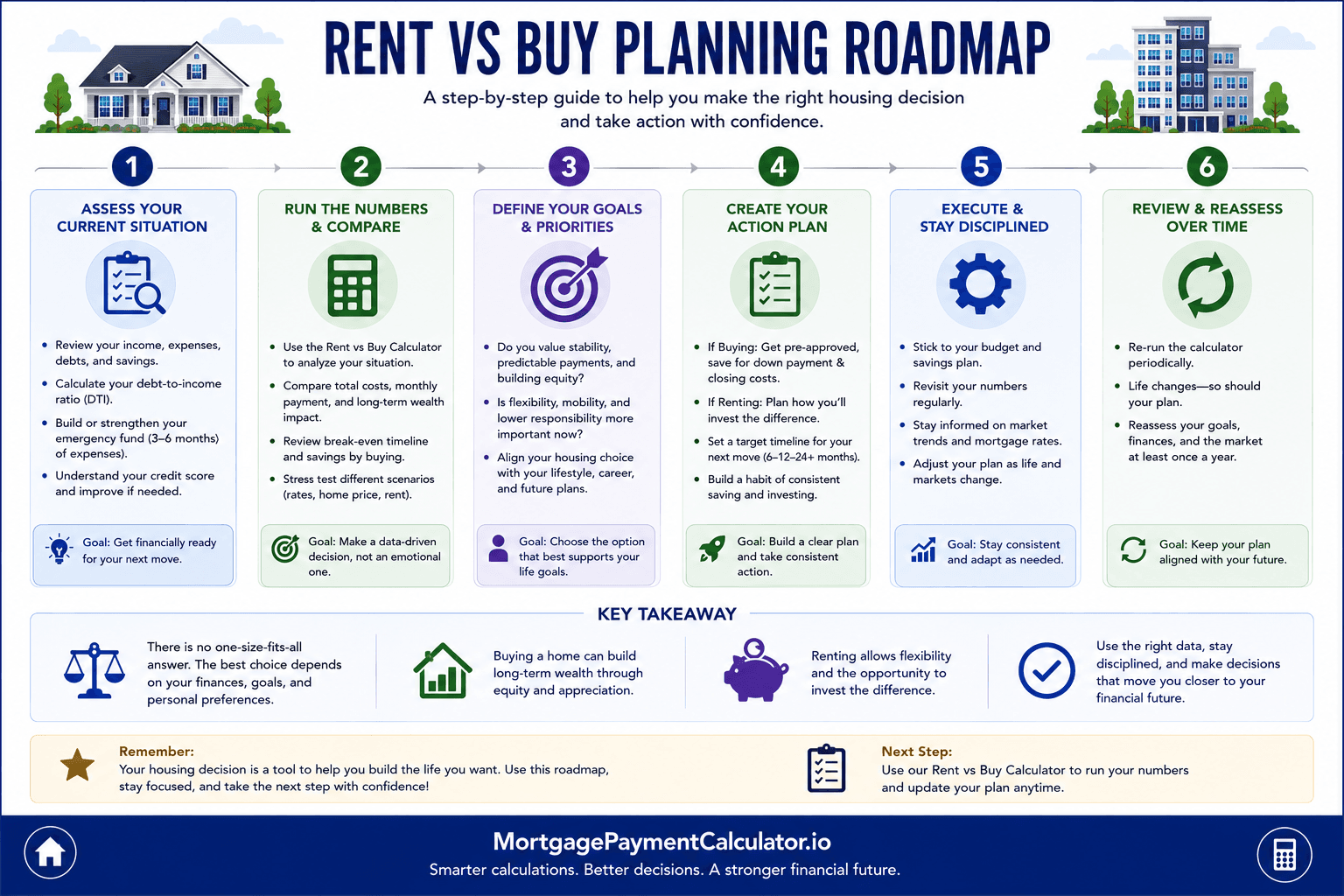
At MortgagePaymentCalculator.io, we empower you with comprehensive analysis and insights through our Rent vs Buy Calculator. Whether you're a first-time home buyer or a seasoned investor, our tool provides a clear comparison of the financial impacts of renting versus buying. With in-depth calculations on mortgages, rentals, taxes, maintenance, and potential investment returns, you can explore scenarios tailored to your financial goals. Make well-informed decisions by understanding long-term wealth accumulation and property appreciation trends. Start charting your financial future today with confidence and clarity.
Frequently asked questions
What is the Rent vs Buy Calculator and how does it help?
The Rent vs Buy Calculator from MortgagePaymentCalculator.io is a tool that provides a comprehensive analysis of the financial implications of renting versus buying a home. It helps assess costs like monthly mortgage payments, potential rent increases, property taxes, maintenance costs, and property appreciation. This empowers users to make informed decisions about their long-term financial strategy.
How does the calculator evaluate long-term wealth?
The calculator estimates the long-term wealth impact by analyzing factors such as property appreciation, equity accumulation, investment growth potential, and tax benefits. It compares these elements to provide insights into how each choice, renting or buying, aligns with your financial goals over time.
What initial costs are factored into the Rent vs Buy Calculator?
The calculator considers initial home buying costs such as down payments, closing fees, and moving expenses. These are compared against potential rental costs, including security deposits and first month's rent, providing a clearer picture of upfront financial commitments.
How important are maintenance costs in the decision to rent or buy?
Maintenance costs are a significant aspect of homeownership that the calculator assesses. Homeowners are responsible for ongoing maintenance, which can vary and accumulate over time. In contrast, renters generally do not bear these costs, as they are typically covered by the landlord.
Can the calculator help evaluate investment growth potential?
Yes, the Rent vs Buy Calculator evaluates the investment growth potential by comparing the financial benefits of equity accumulation and property appreciation in home buying against the investment opportunities that might be available through renting and investing savings elsewhere. This analysis aids in determining which scenario might yield greater returns over time.