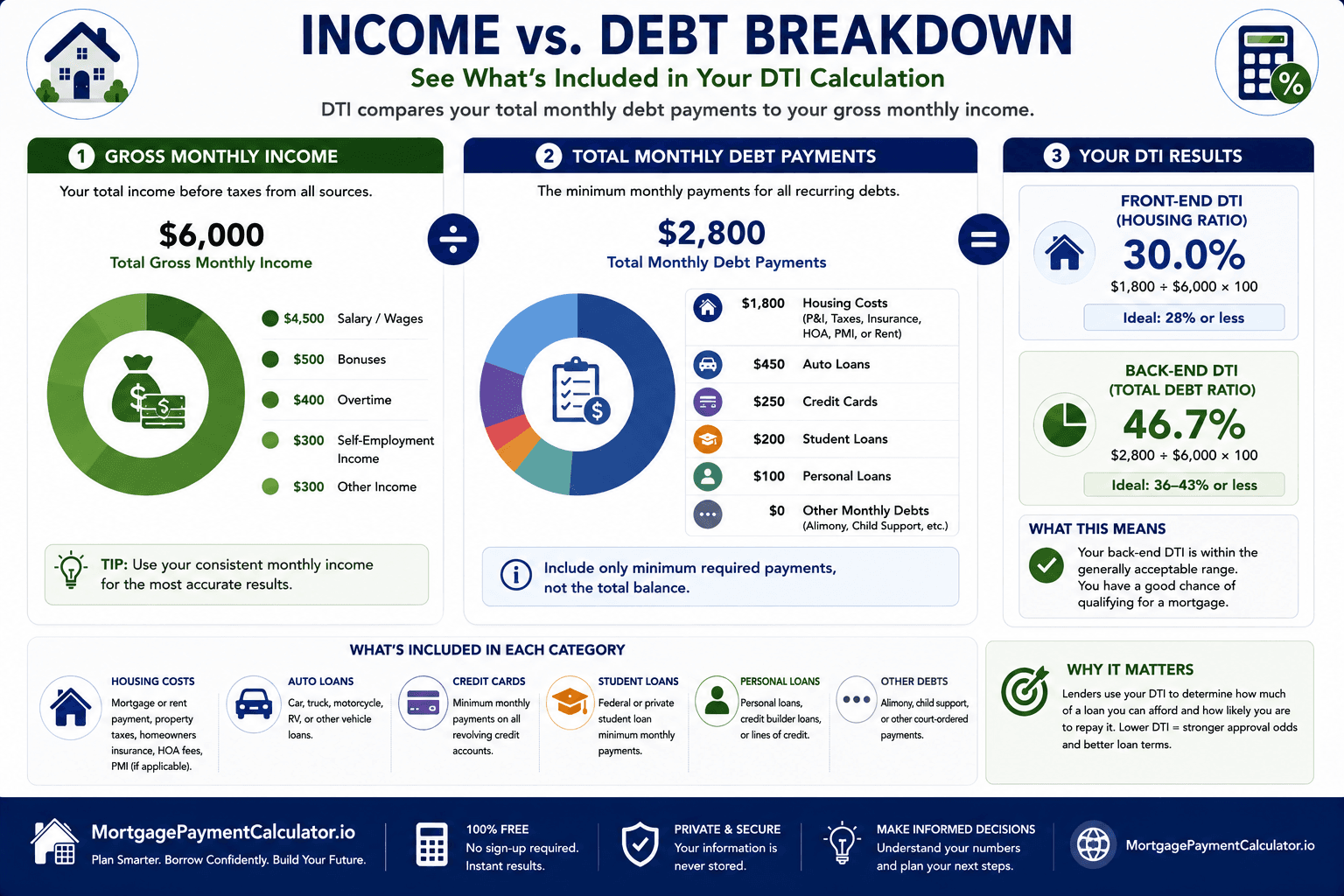
Front-End DTI(Housing Ratio)
30.0%
$1,800 ÷ $6,000 × 100
Manageable
Above the traditional benchmark but potentially manageable.
Common benchmark: 28% or less

Include recurring obligations not entered above, such as court-ordered payments, tax-payment plans, or other required monthly debts. Do not include groceries, utilities, entertainment, or discretionary spending.
Your back-end DTI is in a generally workable range for many mortgage programs, although the lender will also consider credit, reserves, down payment, and the complete loan file.
These are general educational ranges, not approval guarantees or universal underwriting limits.
| Back-End DTI | Range | General View |
|---|---|---|
✓36% or less | Excellent | Strong position relative to a common benchmark. |
●36%–43% | Good | Often generally workable, subject to full underwriting. |
!43%–50% | Acceptable | May qualify, but options and rates may be more limited. |
×Over 50% | High Risk | Approval may be difficult without strong compensating factors. |
Strong position relative to a common benchmark.
Often generally workable, subject to full underwriting.
May qualify, but options and rates may be more limited.
Approval may be difficult without strong compensating factors.
Compare housing costs, other recurring debts, and the income remaining after listed obligations.
A direct comparison of monthly income, housing, other debt, and remaining income.
These estimates show the approximate monthly change needed to reach common DTI targets.
Approximate monthly debt or housing-cost reduction needed.
Approximate monthly obligations to eliminate or offset.
Approximate additional qualifying monthly income needed.
Approximate housing-payment reduction needed.
Actual limits vary by lender, automated underwriting findings, loan type, credit, reserves, and other factors.
| Loan Program | Common Educational Range | Your Status | Important Context |
|---|---|---|---|
| Conventional | About 36%–45% | Possible | Full underwriting, credit, reserves, and loan details still matter. |
| FHA | Often around 43%; sometimes higher | Within common range | Automated underwriting and compensating factors can affect limits. |
| VA | Flexible; residual income matters | Review needed | VA underwriting emphasizes residual income and overall ability to repay. |
| USDA | Common benchmark near 41% | Above benchmark | Program rules and automated underwriting may vary by borrower. |
About 36%–45%
Full underwriting, credit, reserves, and loan details still matter.
Often around 43%; sometimes higher
Automated underwriting and compensating factors can affect limits.
Flexible; residual income matters
VA underwriting emphasizes residual income and overall ability to repay.
Common benchmark near 41%
Program rules and automated underwriting may vary by borrower.
A lower DTI can demonstrate stronger debt management and may improve mortgage approval flexibility.
Welcome to MortgagePaymentCalculator.io's Free Debt-to-Income Ratio Calculator - your essential tool for gauging financial readiness when pursuing a home loan. Designed for prospective home buyers and current homeowners contemplating refinancing, our calculator offers valuable insights into your debt, income, and crucial DTI ratios. By understanding how these factors impact mortgage qualification, you'll be better equipped to meet lender guidelines and achieve homeownership goals. With clear, data-driven results, you can identify strategies to improve your financial profile, gain a competitive edge in the housing market, and confidently navigate the mortgage approval process.
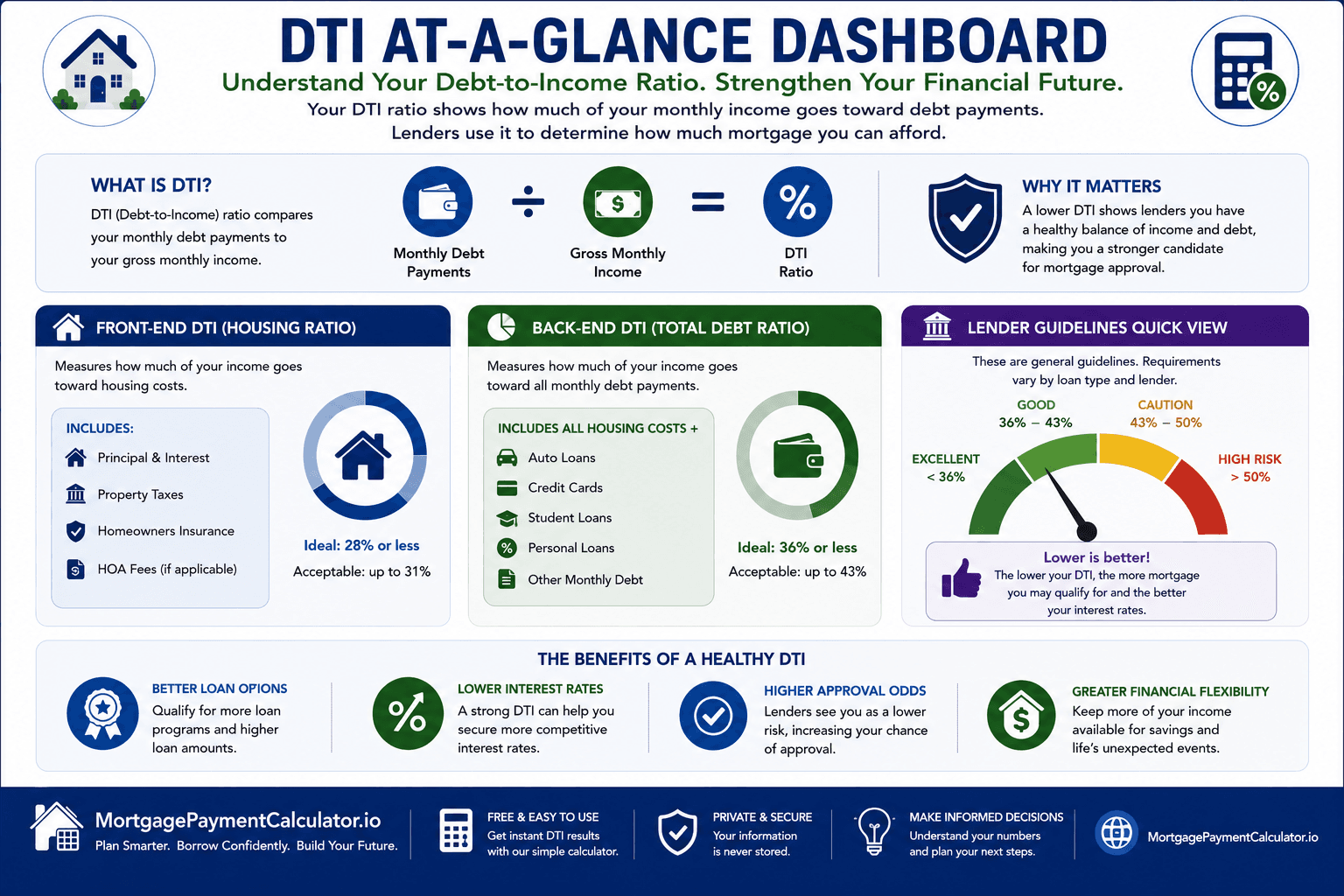
Understanding your debt-to-income (DTI) ratio is essential for home loan qualification. It compares your monthly income with outgoing debts, providing vital insights into financial health and mortgage eligibility. By using the free DTI Calculator from MortgagePaymentCalculator.io, you can effectively analyze your front-end and back-end DTI ratios, compare them with common lender guidelines, and find strategic ways to improve them. This empowers you to enhance mortgage qualification, optimize debt management, and bolster your readiness for homeownership or refinancing, ensuring informed and confident financial decisions.
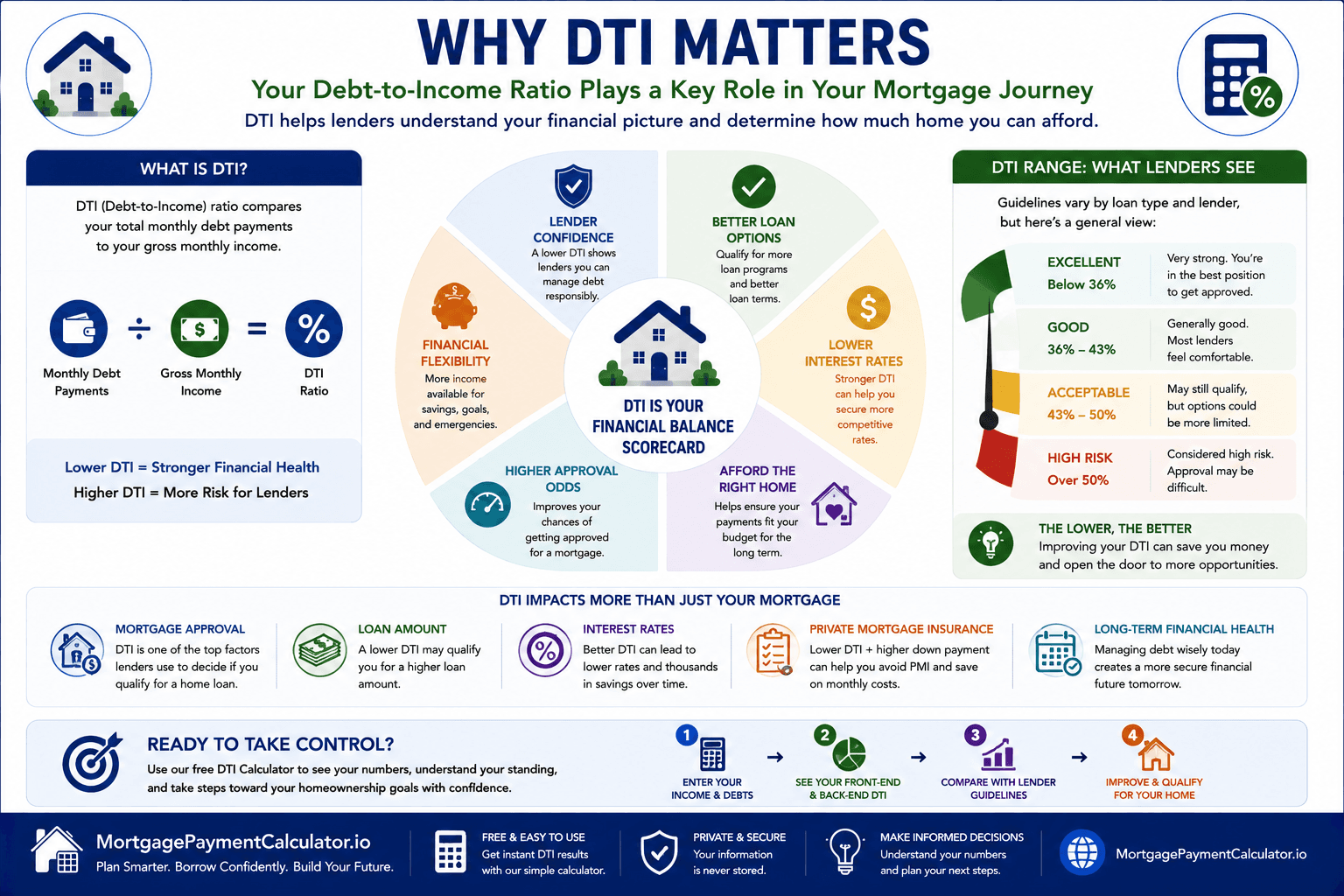
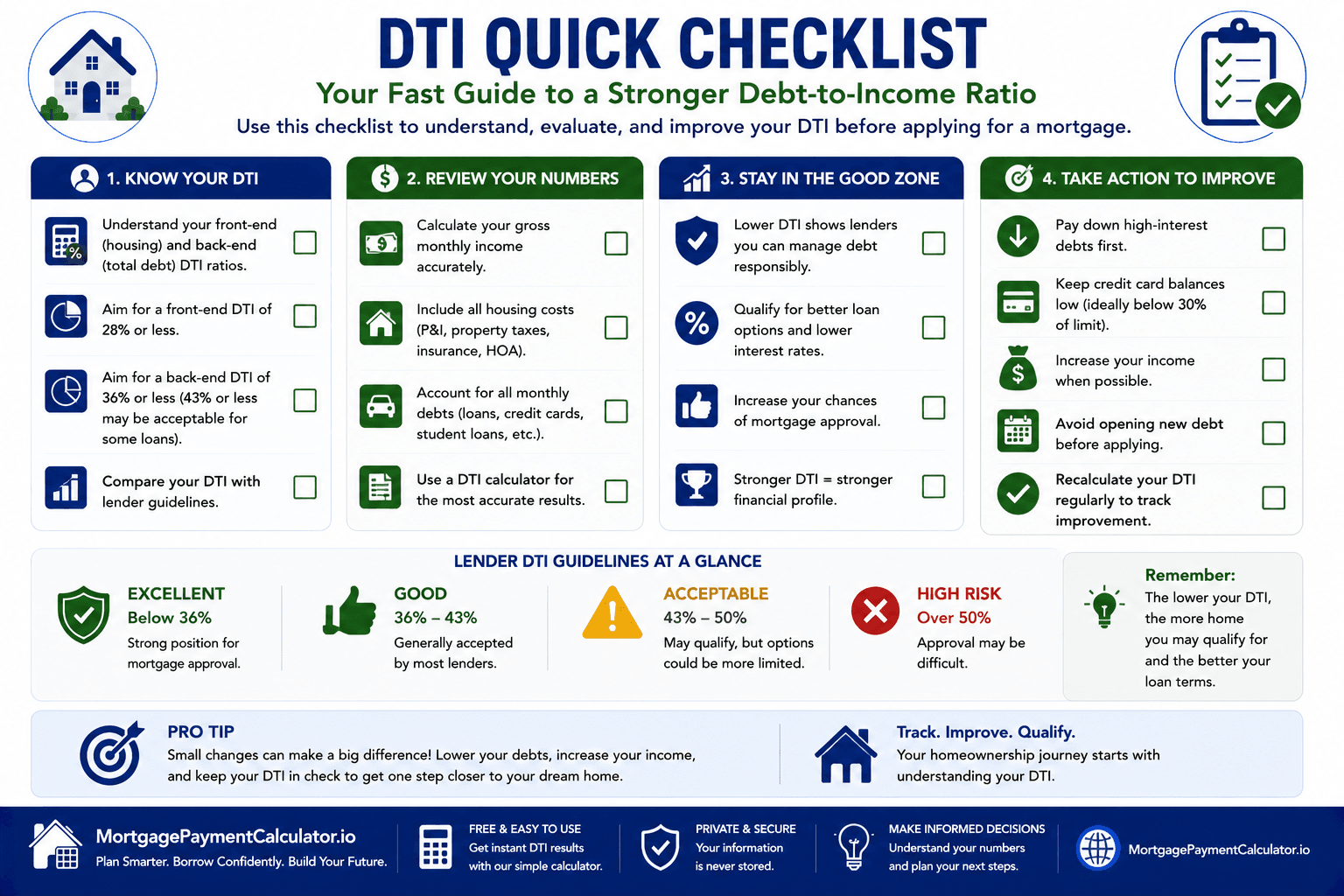
Understanding your debt-to-income ratio is crucial for home loan qualification. This financial metric measures how your income stacks up against personal debts, helping lenders assess your ability to manage mortgage payments. By taking into account your monthly debt, income, and interest obligations, a proper DTI helps you get clearer insights into your budget. It's essential for evaluating whether your accounts are balanced in a way that supports approval from potential lenders, ensuring affordable, sustainable housing.
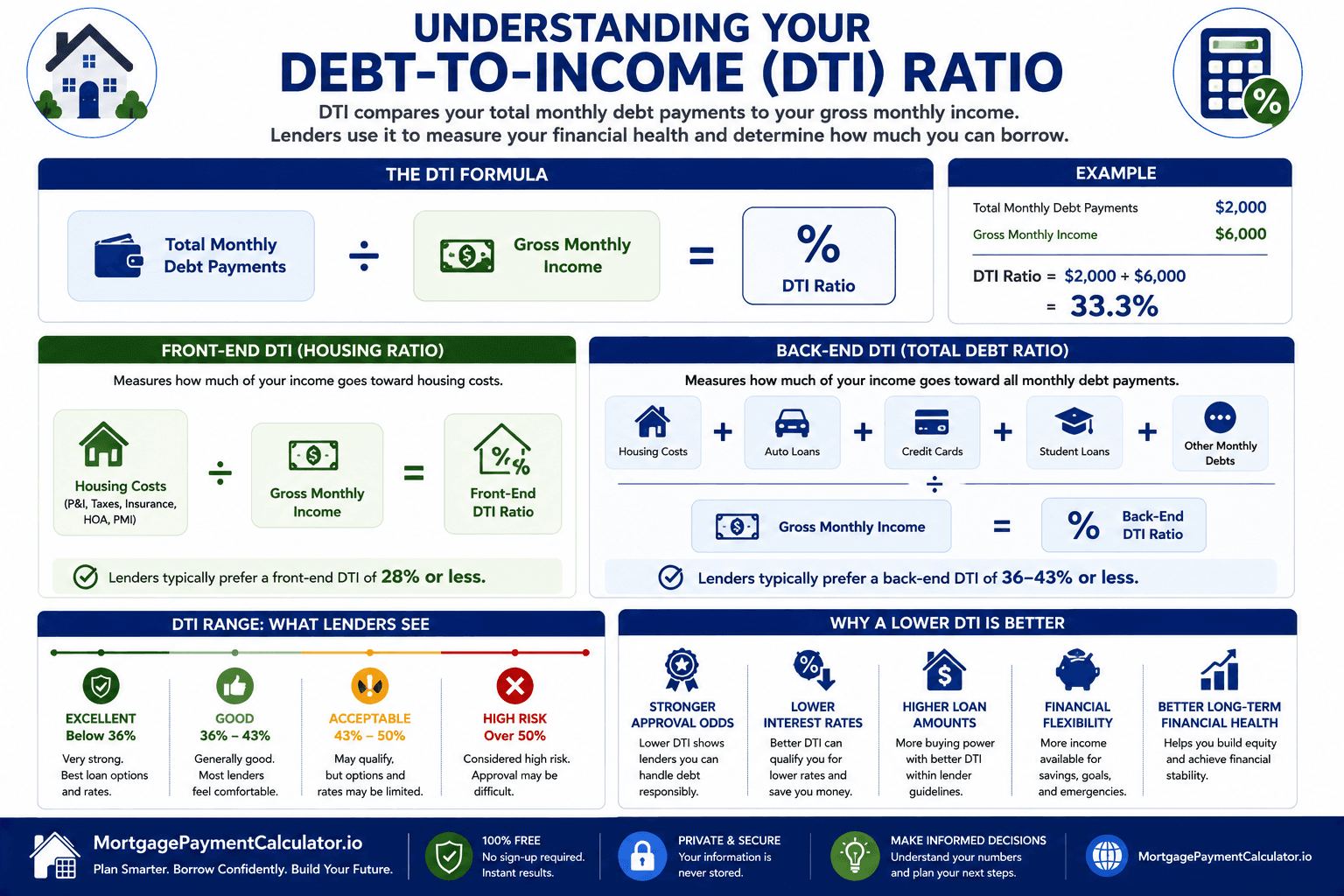
The debt-to-income ratio (DTI) is a key figure lenders use to evaluate your ability to repay loans. It compares your monthly debt payments to your income, providing insight into your financial health. By understanding your DTI, you can identify how your debt and credit affect mortgage qualification. Monitoring this ratio helps you manage personal debt and optimize your financial profile. Lowering your debt or increasing income can improve your DTI, enhancing your borrowing potential.
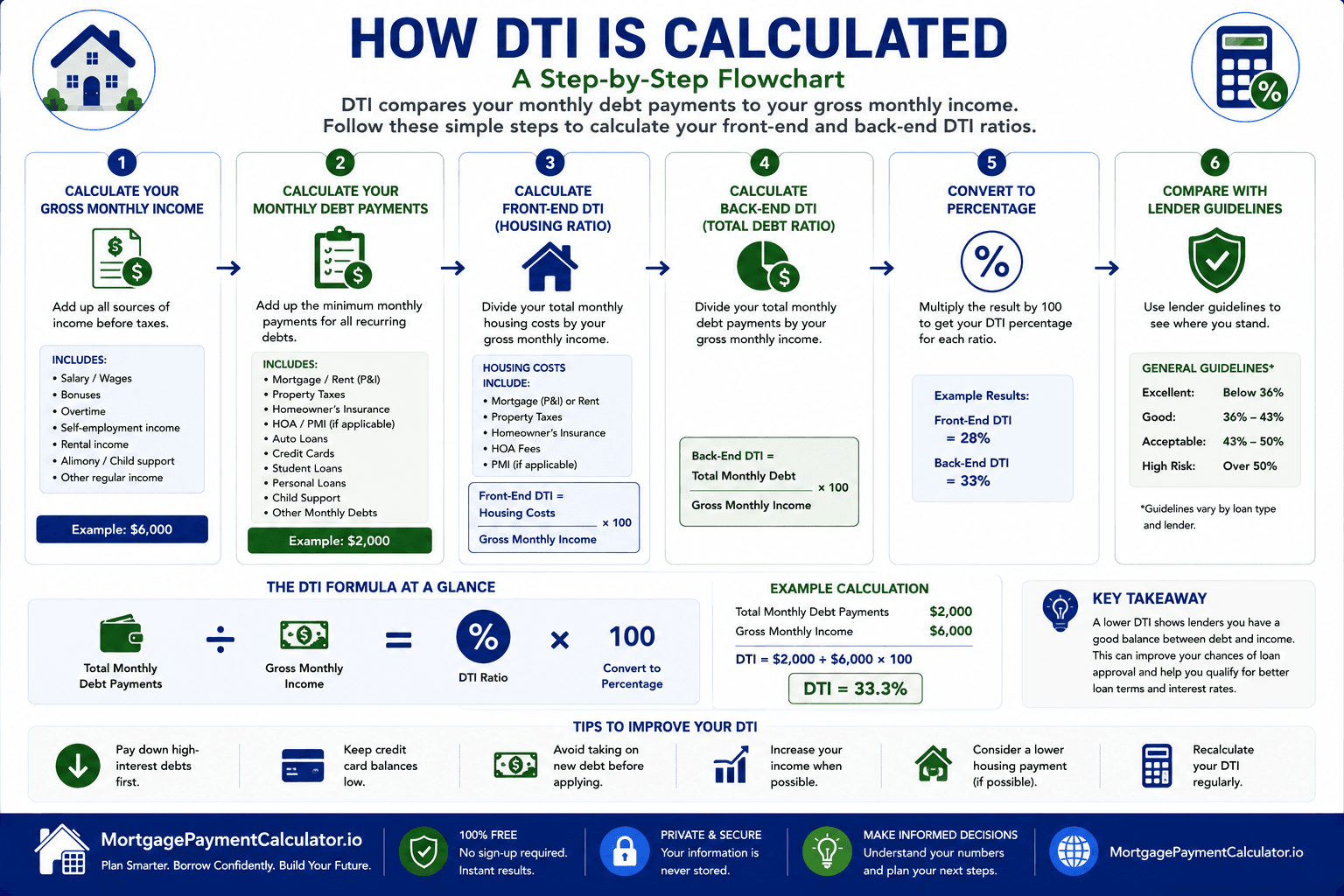
Understanding your debt-to-income (DTI) ratio is crucial for mortgage approval, as lenders closely assess your financial accounts to determine loan eligibility. A favorable DTI indicates better financial stability, improving your chances for loan approval. By balancing debt payments effectively, you align with lender expectations, which is essential for mortgage success. Monitoring DTI helps keep credit healthy and enhances financial prospects, ensuring you meet lender DTI requirements. Manage your debt wisely to strengthen loan qualifications.
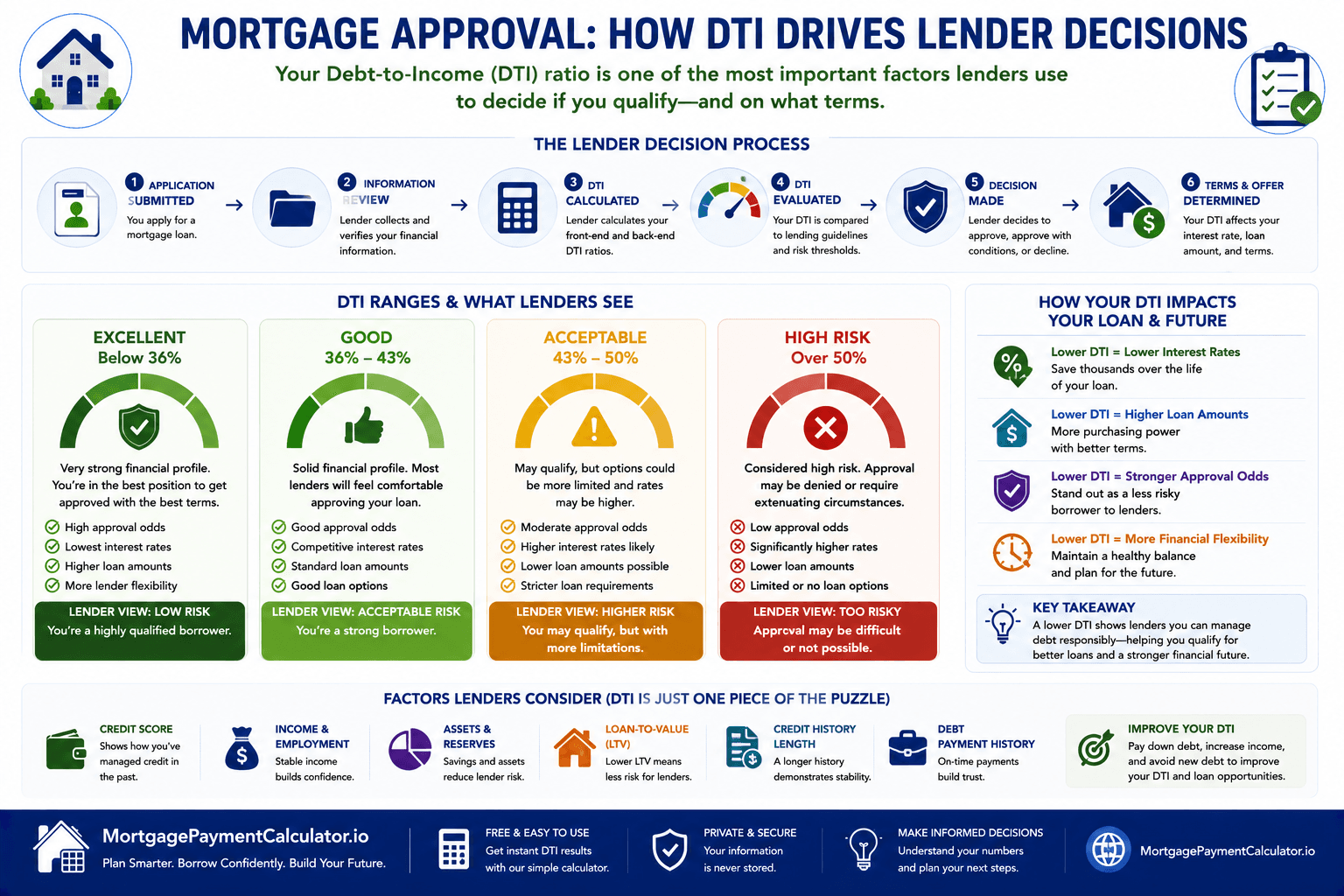
Calculating your debt-to-income ratio with our step-by-step guide is essential for understanding your financial position. This guide simplifies how to break down your debt and income, enabling you to see how monthly payments affect your DTI. By grasping the intricacies of calculating your DTI, you’ll gain valuable insights into managing debts effectively and optimizing your potential for loans. With an accurate DTI calculation, you’re better prepared for future financial decisions and meeting lender expectations.
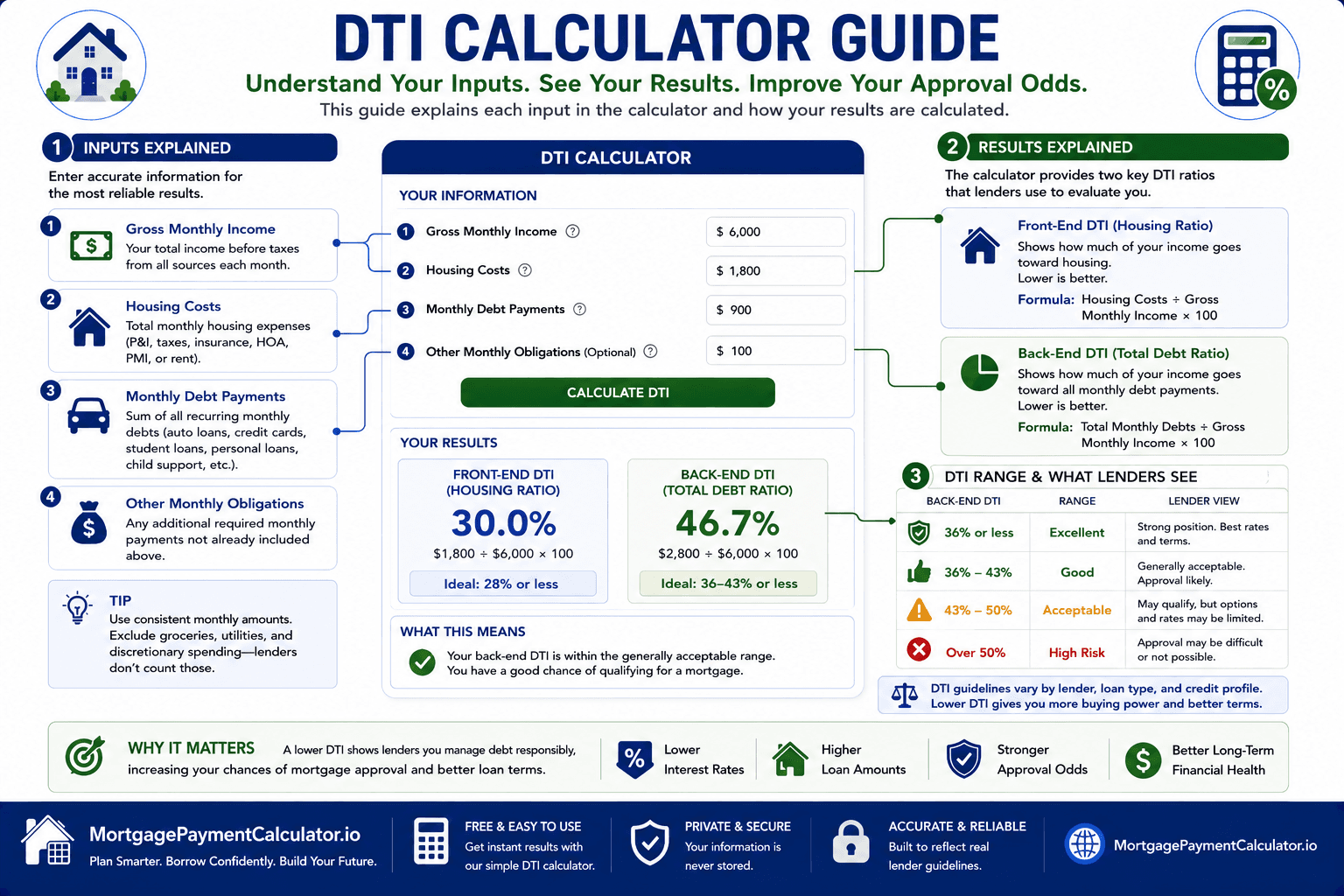
Use this calculator to evaluate your financial situation by accurately inputting your income and debt details. Unlike Zillow's Debt-to-Income Calculator, our tool provides in-depth insights into your DTI. By understanding how your loan obligations affect your financial health, you can strategically lower your debt and budget effectively. Consequently, this enhances your chances of meeting lender expectations. Whether you're optimizing your budget or planning to lower your financial liabilities, this calculator simplifies the process and empowers informed decisions.
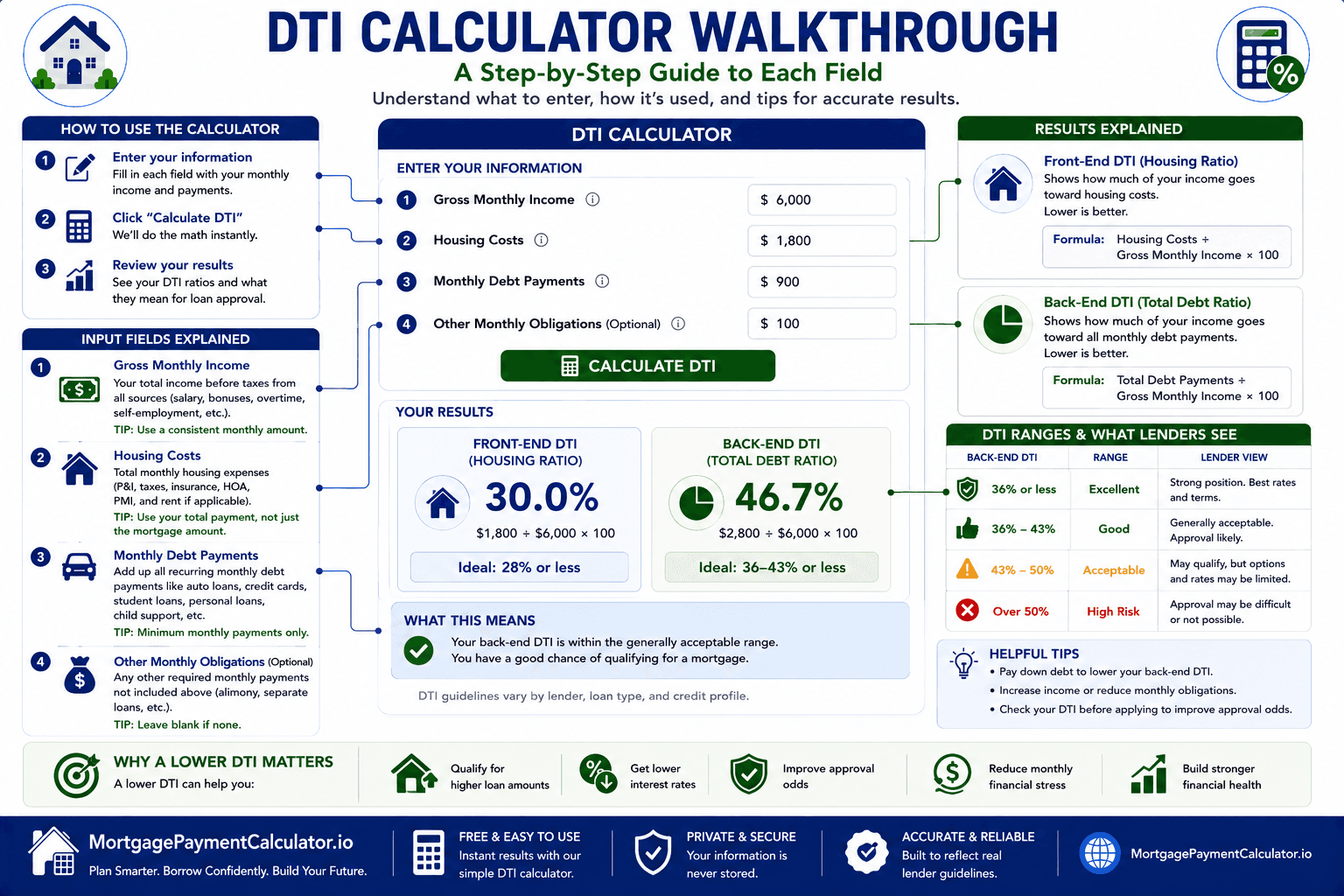
Understanding your monthly debt payments and monthly income is crucial for managing finances. Your gross monthly income provides a clear picture, but it's essential to balance debt and income effectively. By focusing on your loan obligations and personal expenses, you can lower unnecessary payments and improve your financial health. This comprehensive breakdown helps you identify areas where you can lower payments and better manage debt, ultimately empowering you to make informed financial decisions and enhancing your loan qualification prospects.
Understanding the differences between front-end and back-end debt ratios is crucial for financial planning. The front-end ratio focuses on your mortgage loan payment against income, while the back-end ratio considers all debt payments, including interest and other financial obligations. Balancing these debt ratios can help you maintain a healthy budget and improve your financial standing. Knowing how both affect your loan qualifications ensures you're making informed decisions about your personal debt and financial future.
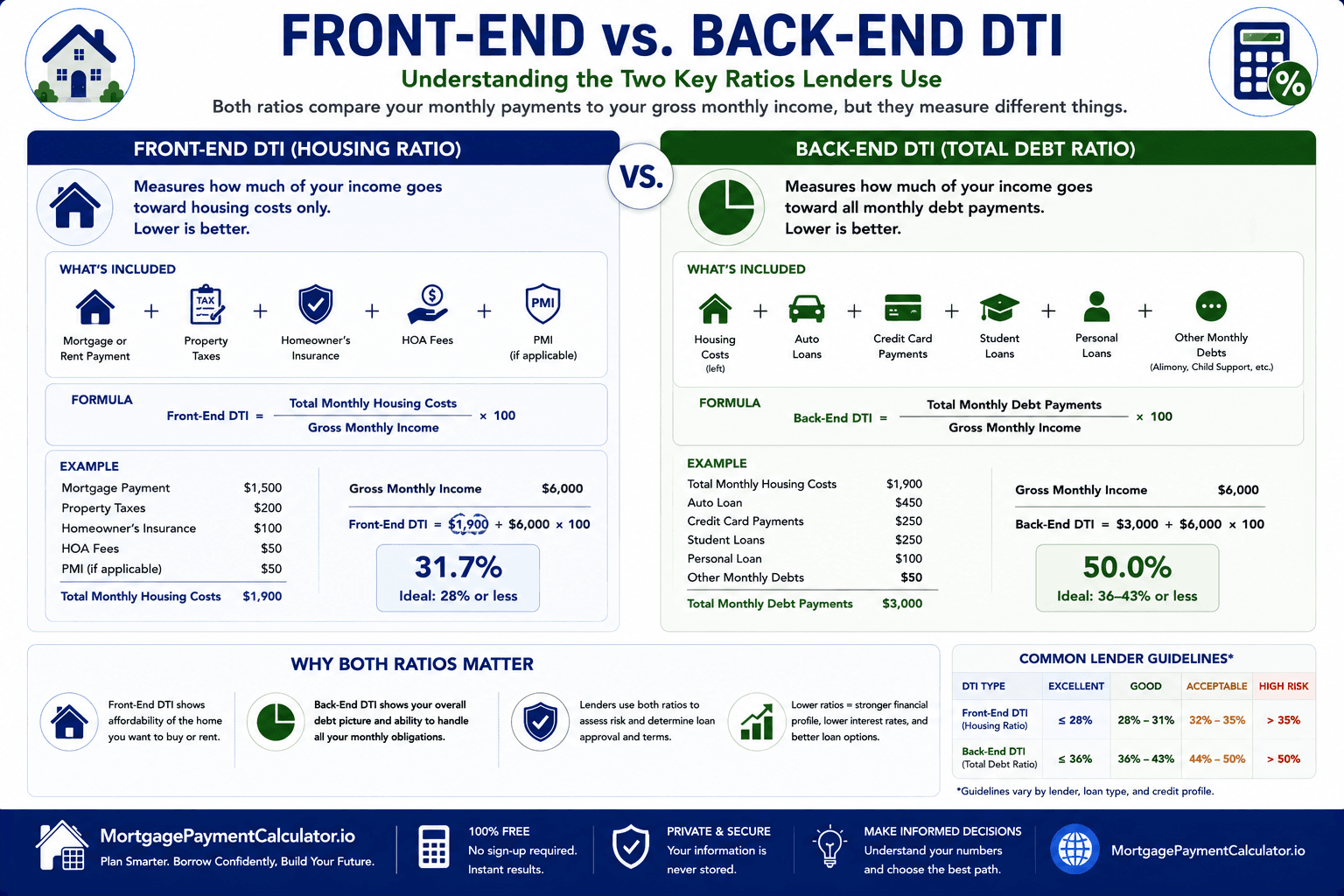
When assessing front-end ratio, lenders examine your income compared to monthly housing expenses. This includes mortgage payments, insurance, and property taxes. Understanding these accounts is crucial for determining loan eligibility. Lenders generally prefer a lower front-end ratio to mitigate risk. Consider your financial situation, ensuring that your payments align with your income. Awareness of current rates and their impact on your debt can improve your loan prospects. Calculate accurately to meet lender expectations and maintain financial stability.
Understanding the back-end ratio is essential, as it reflects how total monthly debt payments impact your financial health. This ratio includes not only the mortgage loan but also other debts such as credit cards and loans. Lenders use this to assess income stability and loan affordability. High percentages may hinder your ability to save, affecting loan approval. Enhancing savings while managing debt ensures better back-end ratios, keeping you aligned with lender financial expectations.
Understanding lender DTI requirements is crucial for home loan approval. The debt-to-income ratio is a financial measure comparing monthly debt payments to income. It helps lenders assess risk before approving loans. By knowing your debt and income ratios, you can identify if you meet lender requirements. Personal financial management, like reducing debt or optimizing loan strategies, can enhance your chances. Evaluating these factors ensures you align with the expectations and guidelines set by lenders.
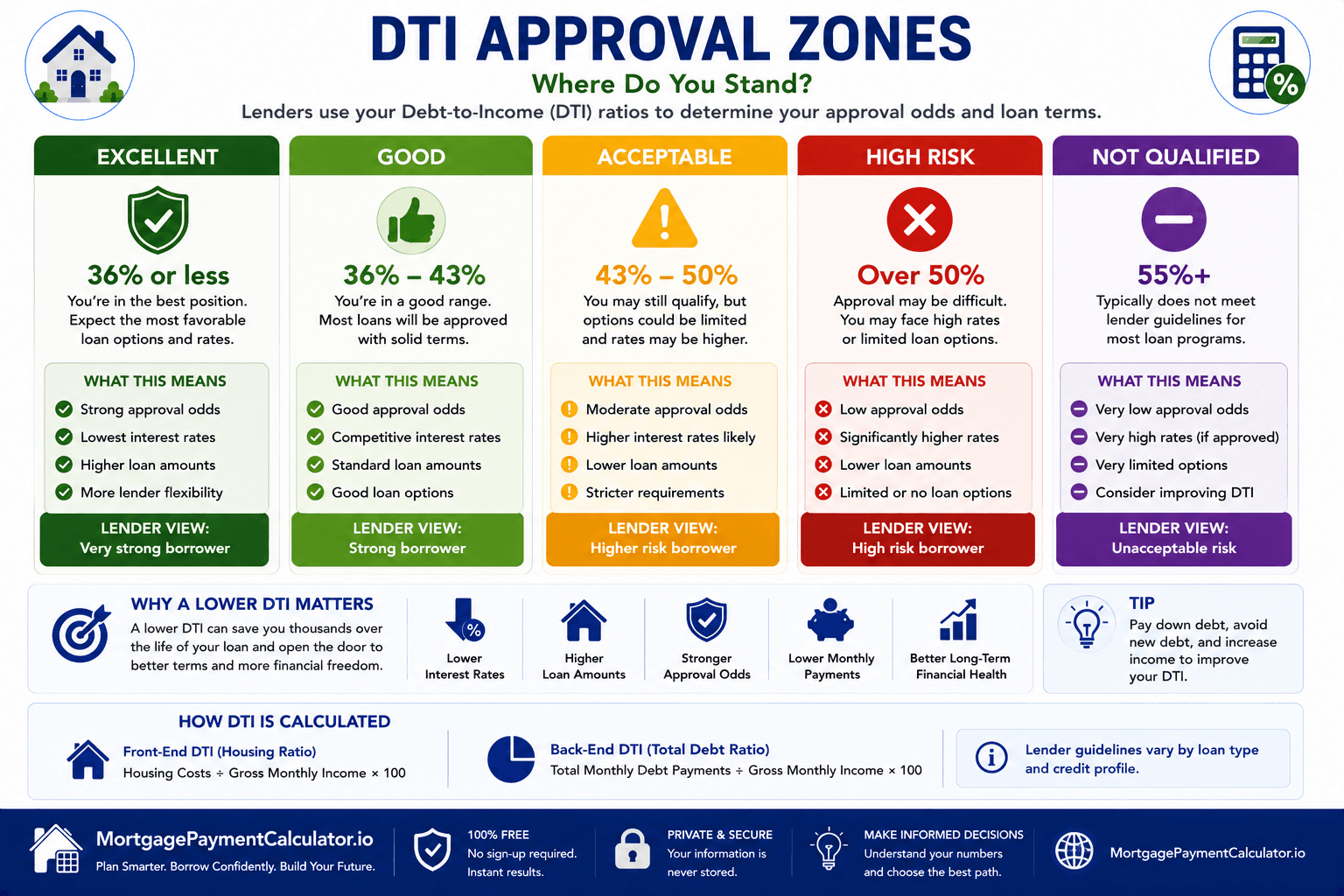
Lenders often set maximum DTI limits to assess your eligibility for loans, considering your current debt and income. Understanding these limits is crucial, as a lower DTI can result in better loan terms, such as reduced interest rates. Meeting these requirements not only strengthens your credit standing but also improves potential savings. Lenders evaluate your maximum DTI to gauge your financial health, ensuring you can comfortably manage loan and debt payments without overburdening your income.
Achieving the ideal balance between debt payments and lender expectations is crucial for financial success. By accurately assessing your debt-to-income ratio, you can gain insights into your personal and business accounts, optimizing both your debt and income. Understanding how personal debt impacts your qualification helps align your financial profile with lender requirements. This knowledge empowers you to improve your strategy for managing debt and meeting or exceeding lenders' expectations effectively.
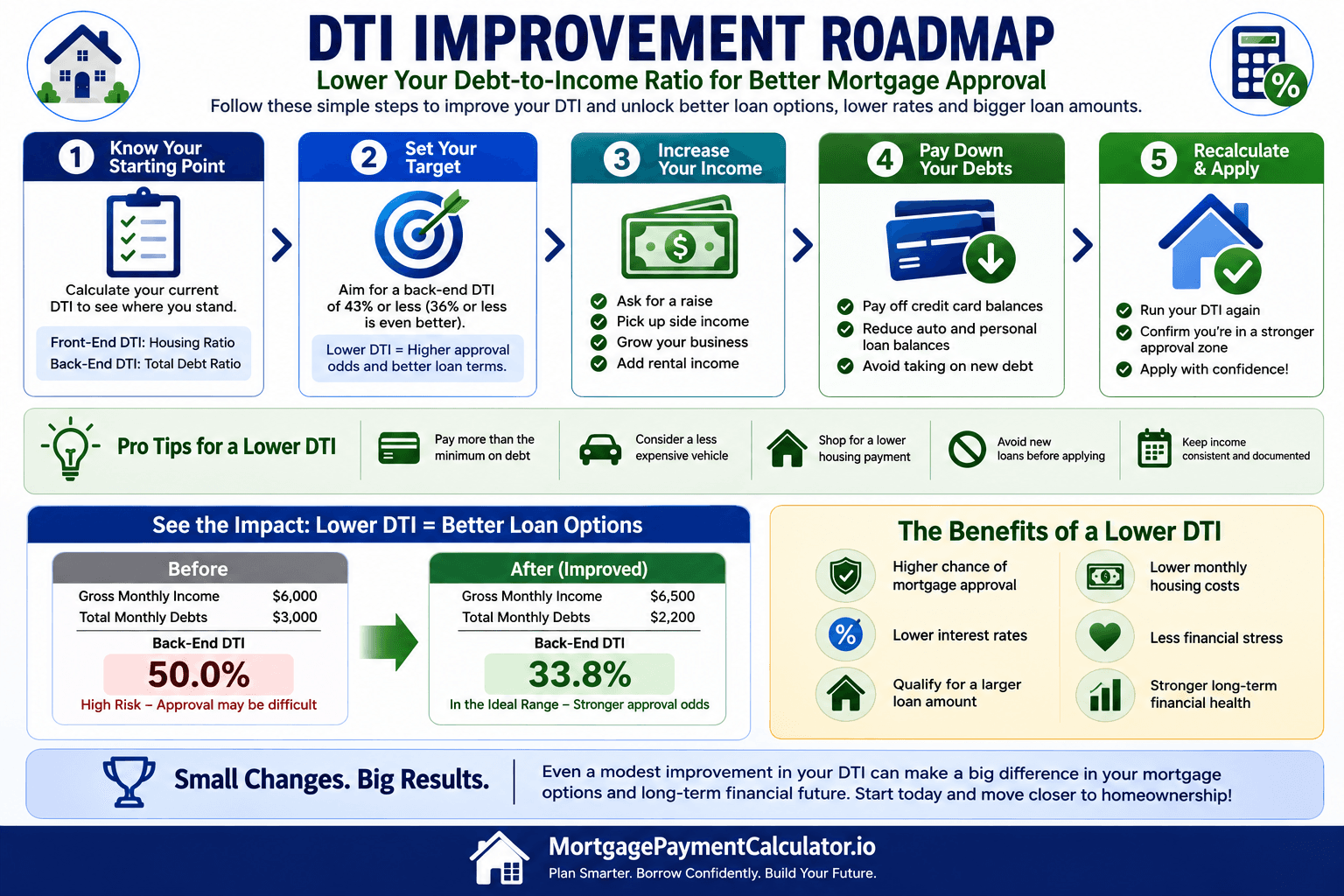
Improving your DTI ratios involves strategic management of debt and income. Start by increasing your savings to reduce financial strain, enabling you to pay down debt more effectively. Consider consolidating debts at lower interest rates to decrease monthly payments. Improving your credit can also significantly impact your borrowing power. Focus on enhancing your income streams, whether through a new job or side gigs, to maintain better debt management, ensuring your financial health remains robust.
| Strategy | Approach | Benefits | Challenges | Impact on DTI |
|---|---|---|---|---|
| Reduce Outstanding Debt | Pay down high-interest credit cards and loans first | Decreases financial burden and interest payments | Requires consistent cash flow for payments | Lowers DTI ratio effectively |
| Increase Income | Pursue additional job opportunities or request salary raise | Enhances cash flow and savings potential | May require time and additional effort | Dilutes DTI ratio by increasing denominator |
| Consolidate Debts | Combine multiple debts into a single loan with lower interest | Simplifies payments and reduces interest rates | May involve fees and longer commitment | Provides more manageable payment schedules |
| Create a Budget Plan | Track expenses and limit discretionary spending | Improves financial discipline and savings | Requires regular monitoring and adjustments | Indirectly assists in reducing debt levels |
This table encapsulates the strategic approaches to managing and optimizing DTI ratios, reflecting on debt management and income enhancement for financial resilience.
To boost your financial stability, it's crucial to increase income and reduce personal debt. Start by creating a detailed budget that outlines your income and expenses. Look for opportunities to increase income through side jobs or promotions. Concurrently, focus on reducing personal debt by prioritizing high-interest obligations. Consistent savings habits also enhance financial health. Maintaining a good credit score helps in getting lower interest rates, positively impacting your debt-to-income ratio and personal financial journey.
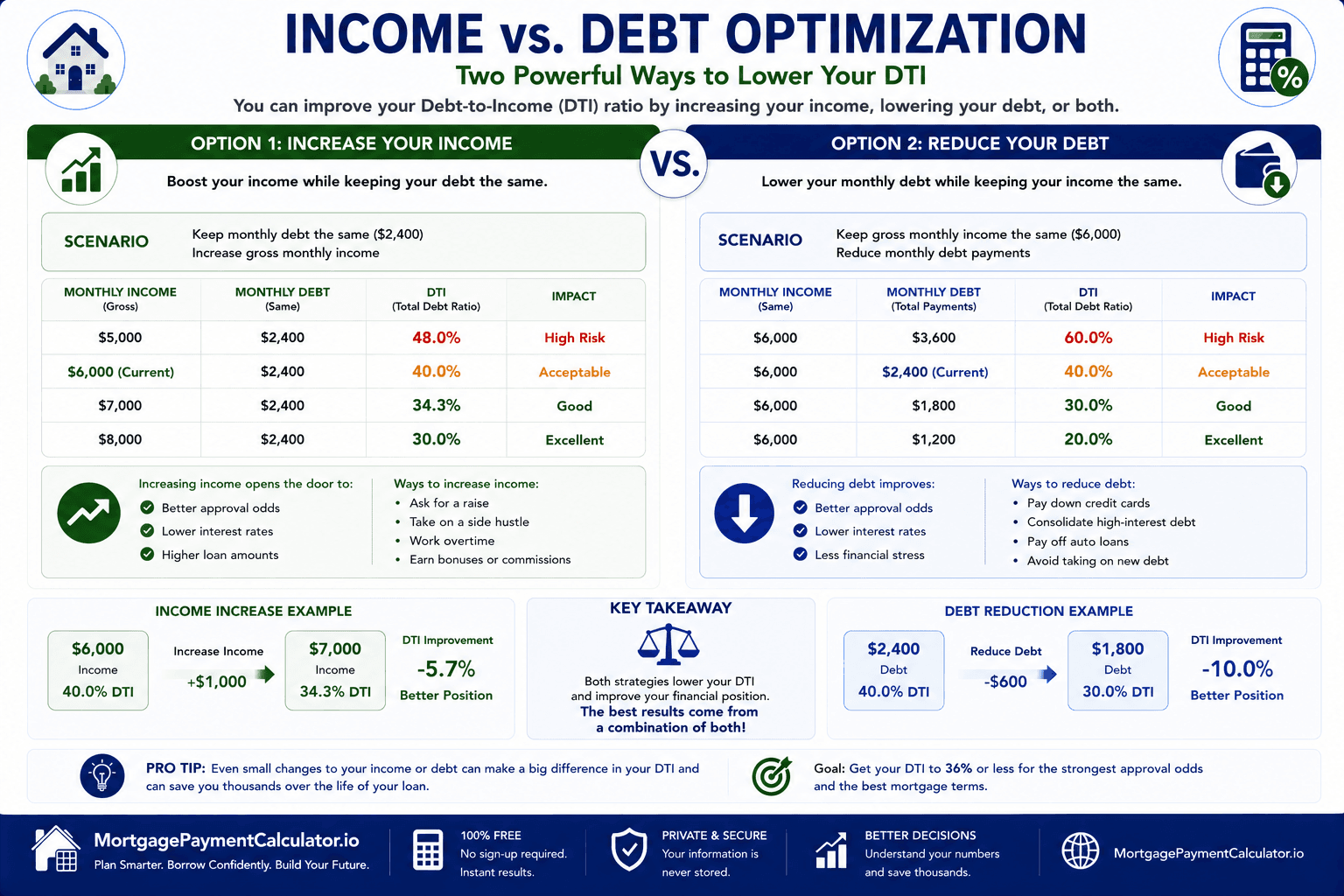
To effectively implement these strategies, consider the following actionable steps:
These steps can guide you toward enhanced financial well-being and stability.
Optimizing monthly payments is crucial for achieving better financial ratios, helping you manage your debt effectively. By closely monitoring both income and expenses, you can improve your DTI and enhance eligibility for business loans and savings accounts. Consider reevaluating your financial commitments regularly to ensure you’re on track. Whether you’re dealing with personal finances or managing a business, strategically handling debt and optimizing payments can lead to better savings and improved loan qualification.
Understanding the impact of credit history on your DTI is crucial for loan qualification. Lenders scrutinize both your credit and DTI when assessing your financial health. High-interest rates or a poor credit history can increase debt, affecting your income-to-debt balance negatively. Lenders set specific DTI limits for loans, and a strong credit history can help you meet those requirements. By managing your debt and maintaining a clean credit history, you can optimize financial outcomes and improve loan qualification prospects.
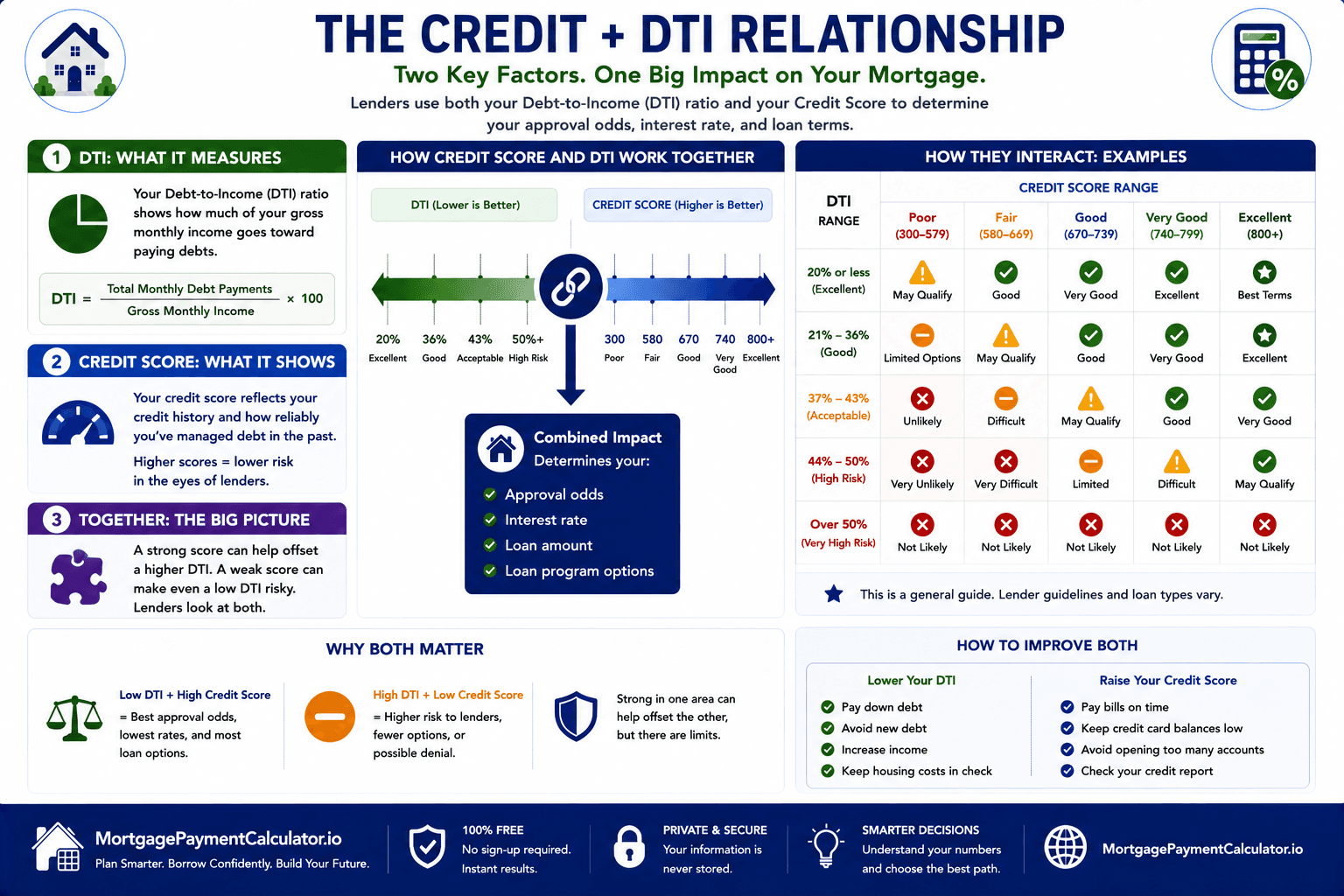
Your credit history plays a vital role in loan qualification. Lenders assess your credit to determine risk and decide on interest rates. A strong credit history, combined with manageable debt and stable income, increases chances of approval. Lenders value resources like savings for added security. Without a solid credit background, securing favorable terms can be difficult, affecting income allocation towards debt. Credit impacts not only loan qualification but also ongoing financial planning and management.
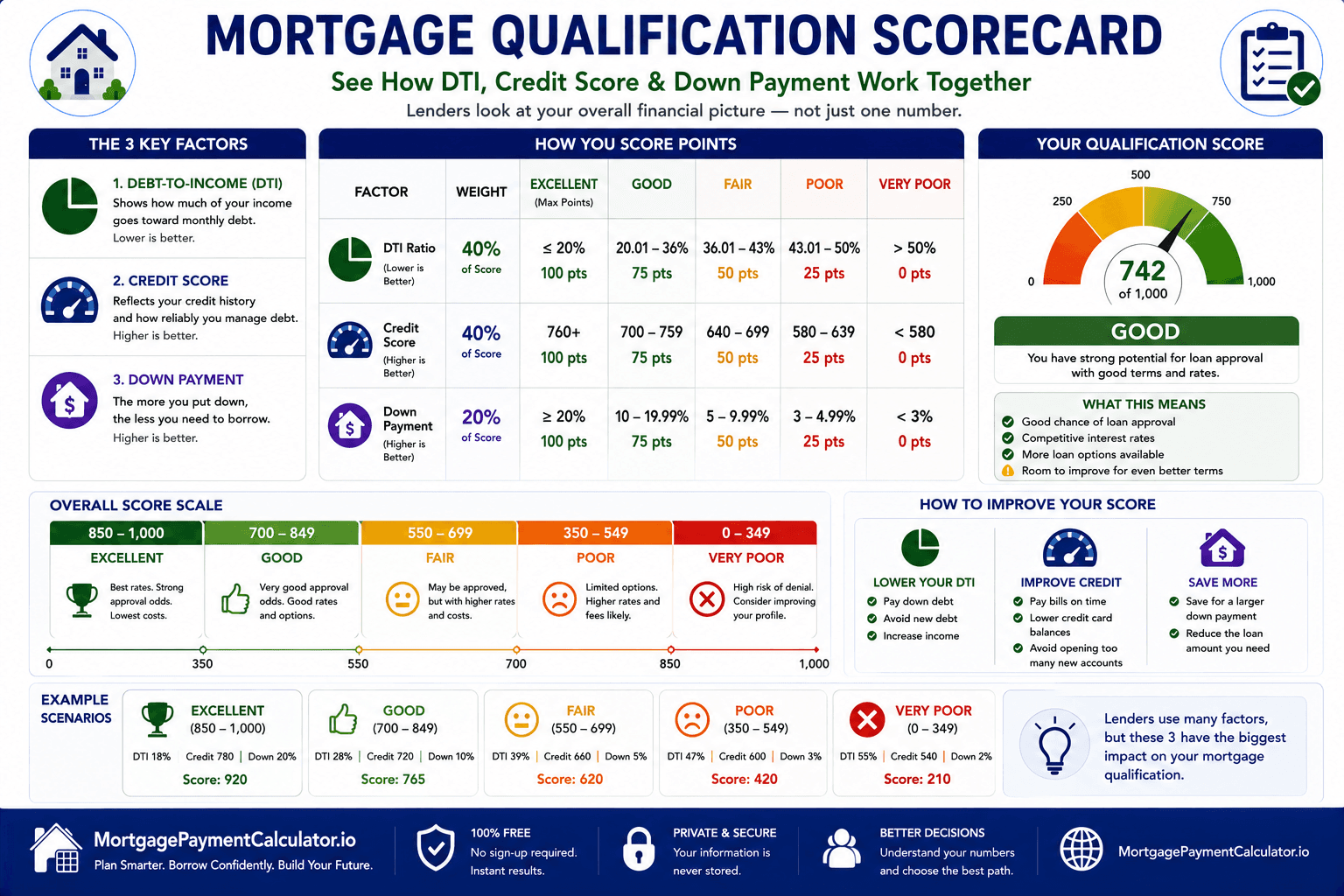
Understanding the debt-to-income (DTI) ratio is crucial for mortgage approval as lenders evaluate your debt levels compared to your income. Many borrowers wonder how their financial habits and credit history impact loan eligibility. Do loans with lower rates favor those with better credit or debt management skills? The answers can help you align your financial strategy to meet lender expectations. Use these insights to refine your credit, debt, and income approaches for better loan opportunities.
Navigating the world of debt and understanding the debt-to-income (DTI) ratio often brings up common concerns and misconceptions. Many believe high income alone ensures easy loan approval. However, balancing debt payments with income is crucial for meeting financial goals. Personal savings shouldn’t be ignored, as they play a significant role in loan qualification. Knowing the common misconceptions about DTI helps individuals make informed financial decisions and optimize their loan application process effectively.
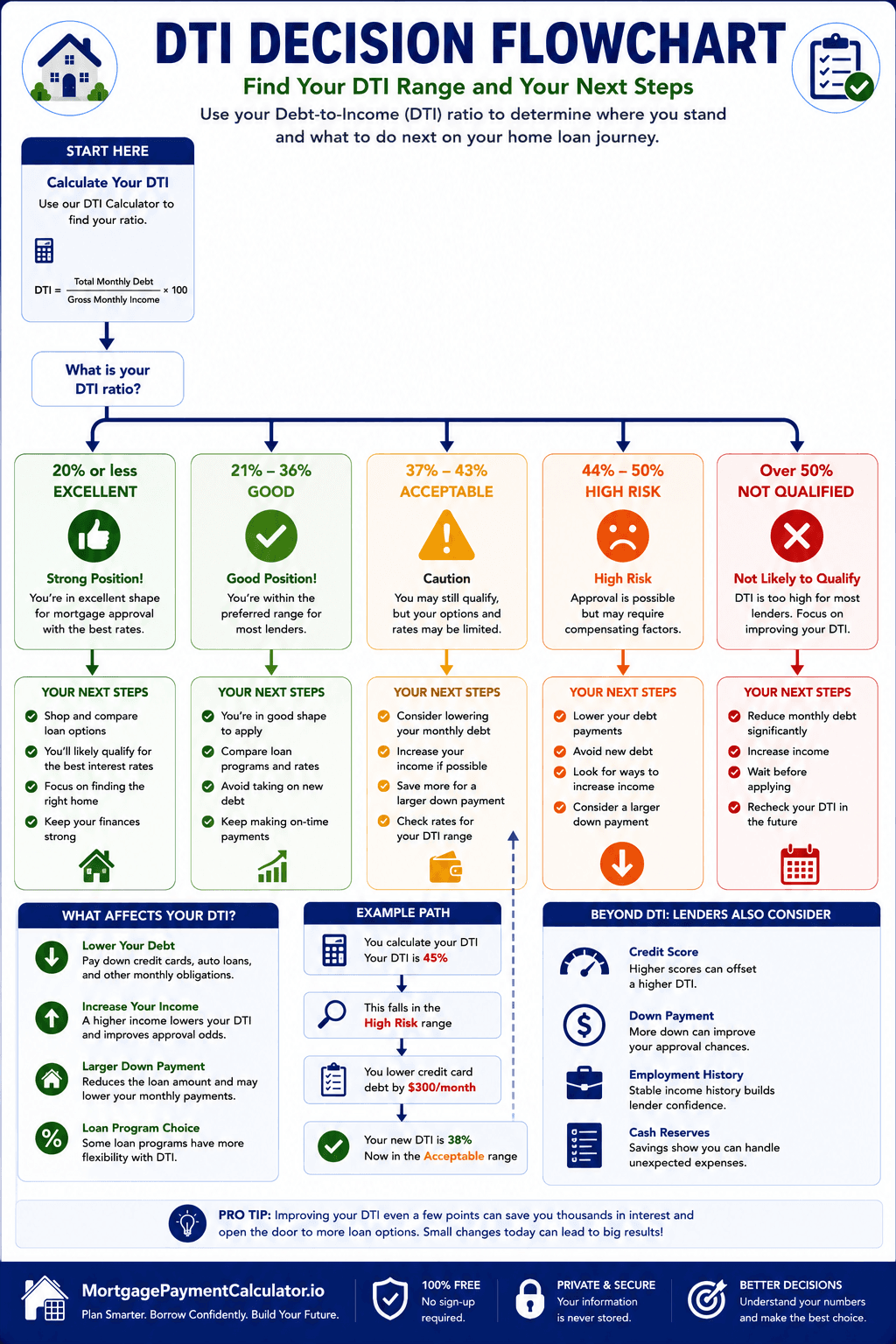
At MortgagePaymentCalculator.io, our free Debt-to-Income (DTI) Calculator is designed to help you navigate the complexities of mortgage qualification. By accurately assessing your front-end and back-end DTI ratios, you gain valuable insights into your financial health. Compare your results against lender guidelines, and explore options to improve your DTI for better loan eligibility. As you prepare for homeownership or refinancing, our tool ensures you understand how monthly debts influence your mortgage journey, empowering you to make informed financial decisions with confidence.
The Debt-to-Income (DTI) ratio is a financial metric used to evaluate your ability to manage monthly debt payments compared to your monthly income. It gives lenders insight into your financial health and is crucial for assessing mortgage qualification.
Improving your DTI involves increasing your income and reducing your debt. Consider strategies like taking on additional income streams, consolidating debts at lower interest rates, or prioritizing high-interest debt for repayment.
Front-end DTI ratio refers to the percentage of your income that goes towards housing expenses, while back-end DTI includes all monthly debt obligations. Lenders use both to assess financial stability and loan approval potential.
Your credit history influences the interest rates and terms of your debt, affecting your DTI. A strong credit history can help secure better loan terms and improve your overall debt management strategy.
Lenders use DTI ratios to evaluate your capacity to handle mortgage payments alongside existing debt. Meeting lender-set DTI thresholds can enhance your chances for approval and secure favorable loan terms.