Available Credit
$150,000
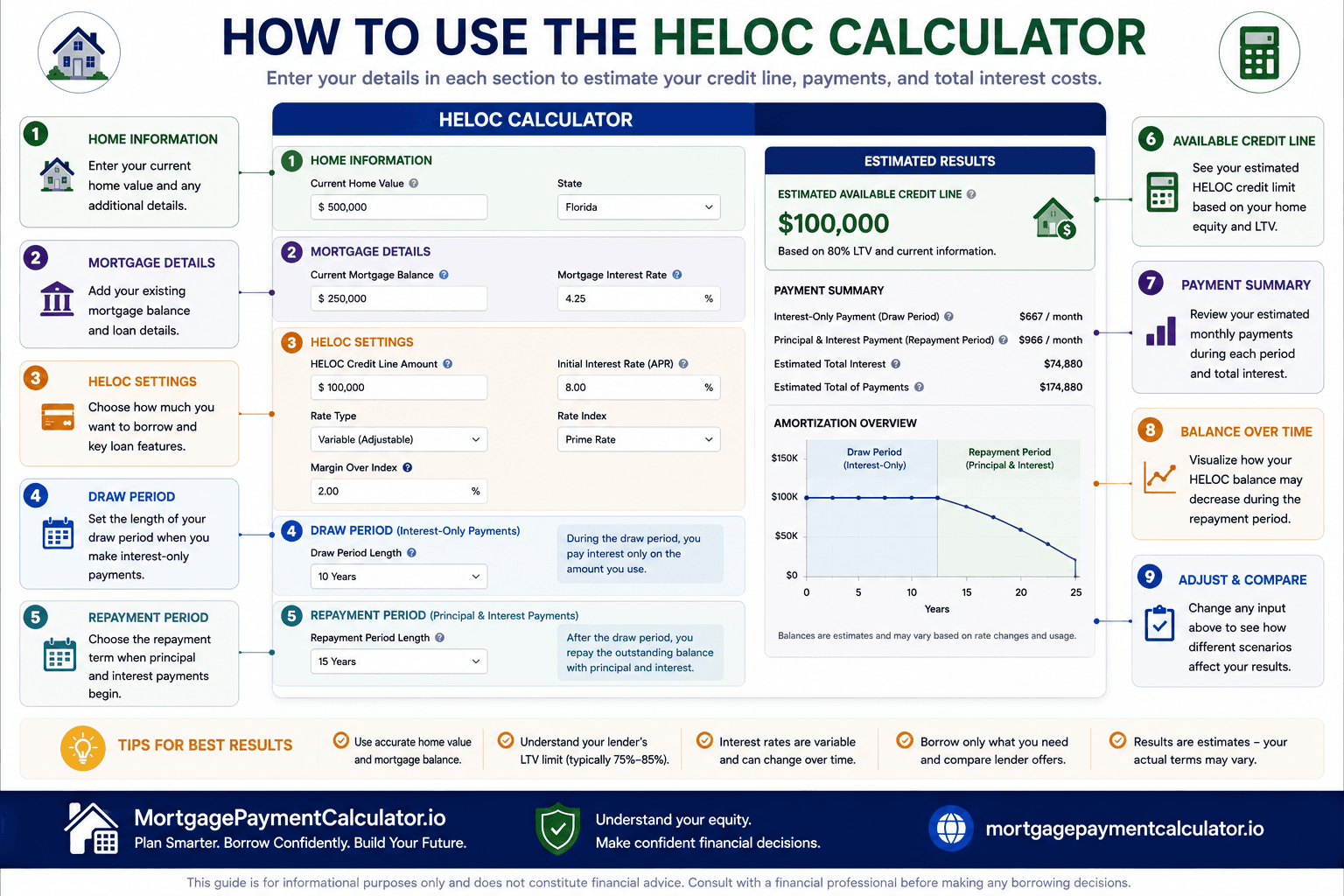
At the selected 80% CLTV limit, this is the estimated maximum line before lender underwriting.

At the selected 80% CLTV limit, this is the estimated maximum line before lender underwriting.
The estimate assumes interest-only payments while the line is in the draw period.
The payment generally rises when the line converts to principal-and-interest repayment.
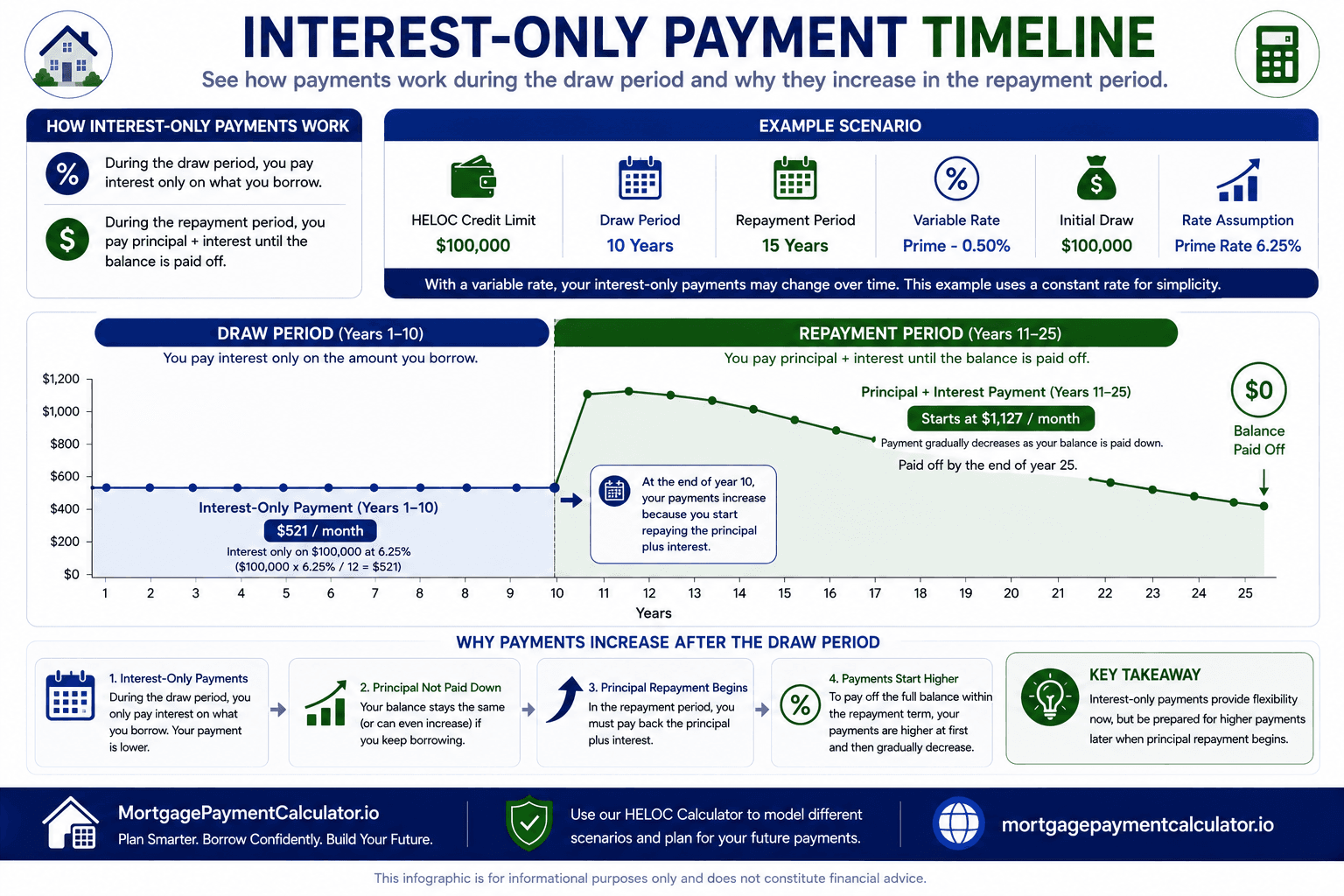
Visualize the transition from the draw period into principal-and-interest repayment.
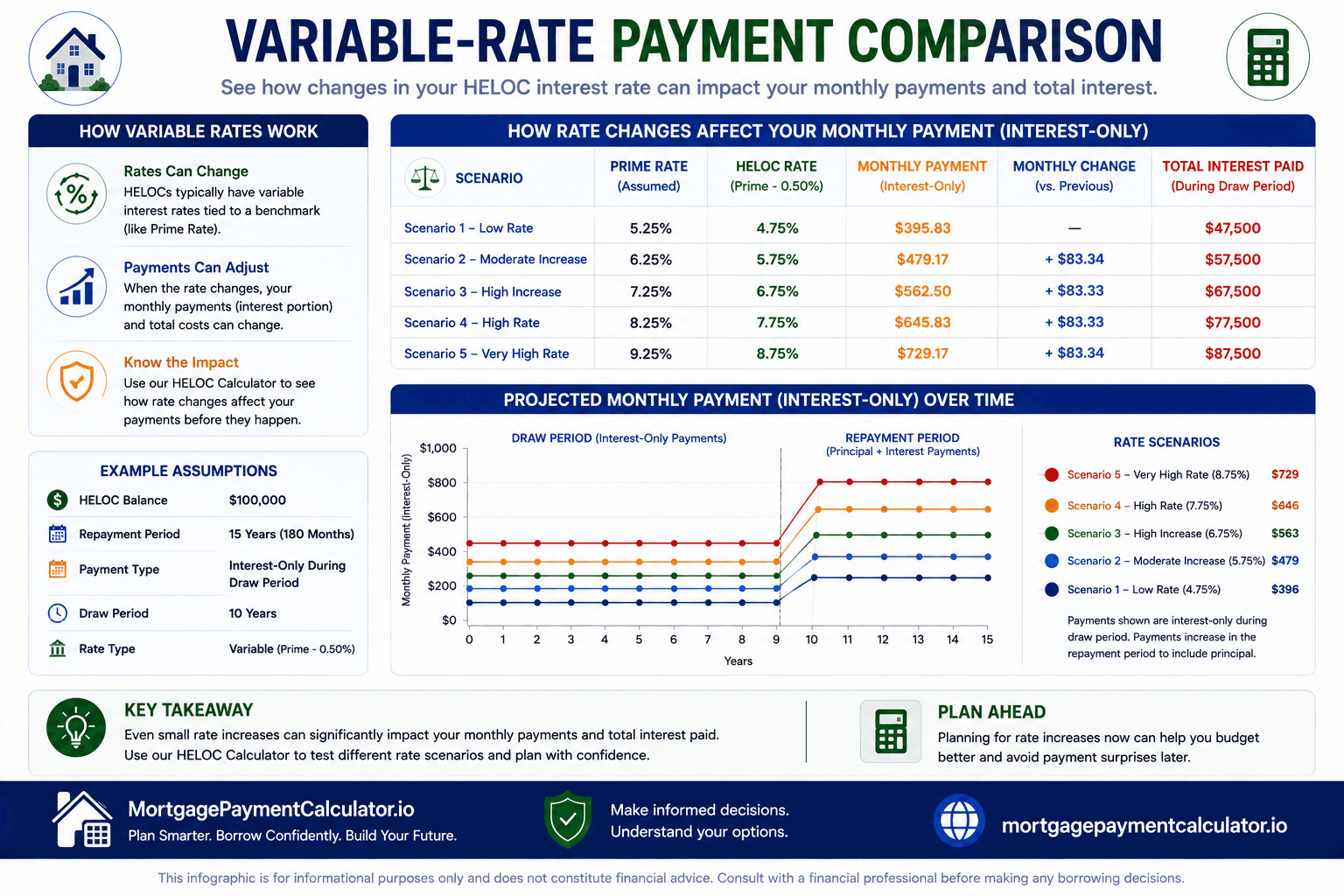
See how rate changes could affect draw-period and repayment-period payments.
| Scenario | Rate | Draw Payment | Repayment Payment | Monthly Change | Total Interest |
|---|---|---|---|---|---|
| -2% | 6.00% | $500.00 | $843.86 | -$111.80 | $111,894.23 |
| -1% | 7.00% | $583.33 | $898.83 | -$56.82 | $131,789.09 |
| Current | 8.00% | $666.67 | $955.65 | $0.00 | $152,017.38 |
| +1% | 9.00% | $750.00 | $1,014.27 | +$58.61 | $172,567.99 |
| +2% | 10.00% | $833.33 | $1,074.61 | +$118.95 | $193,428.92 |
Review annual payments, principal, interest, fees, phase, and ending balance.
See the monthly transition from the draw period to the repayment period.
The selected line is within the estimated 80% CLTV limit.
The estimated payment changes by $288.99 when repayment begins.
A variable HELOC can become more expensive if the index rises.
HELOC qualification normally also depends on credit, income, debt-to-income ratio, occupancy, property type, lien position, minimum draw rules, and lender underwriting. The maximum line estimate is not a loan approval.
Explore your borrowing potential with our Home Equity Line of Credit (HELOC) Calculator from MortgagePaymentCalculator.io. Designed for current homeowners like you, this tool accurately estimates available credit lines, monthly payments, and total interest costs. Whether you're considering a HELOC for home improvements, debt consolidation, major purchases, or other expenses, understanding how your home's value and mortgage balance influence financing options is essential. Use this calculator to evaluate borrowing strategies, tailor your financing plans, and make informed decisions with confidence. Make the most of your home's equity today!
Explore your borrowing potential with the Home Equity Line of Credit (HELOC) Calculator from MortgagePaymentCalculator.io. This tool helps current homeowners estimate credit lines, monthly payments during draw and repayment periods, and total interest costs based on home value and mortgage balance. By understanding how factors like your loan-to-value ratio affect borrowing opportunities, you can make informed decisions for debt consolidation, home improvements, or major purchases. Utilize practical insights to tailor your financing plans effectively, ensuring you maximize your home's equity to meet your financial needs confidently.
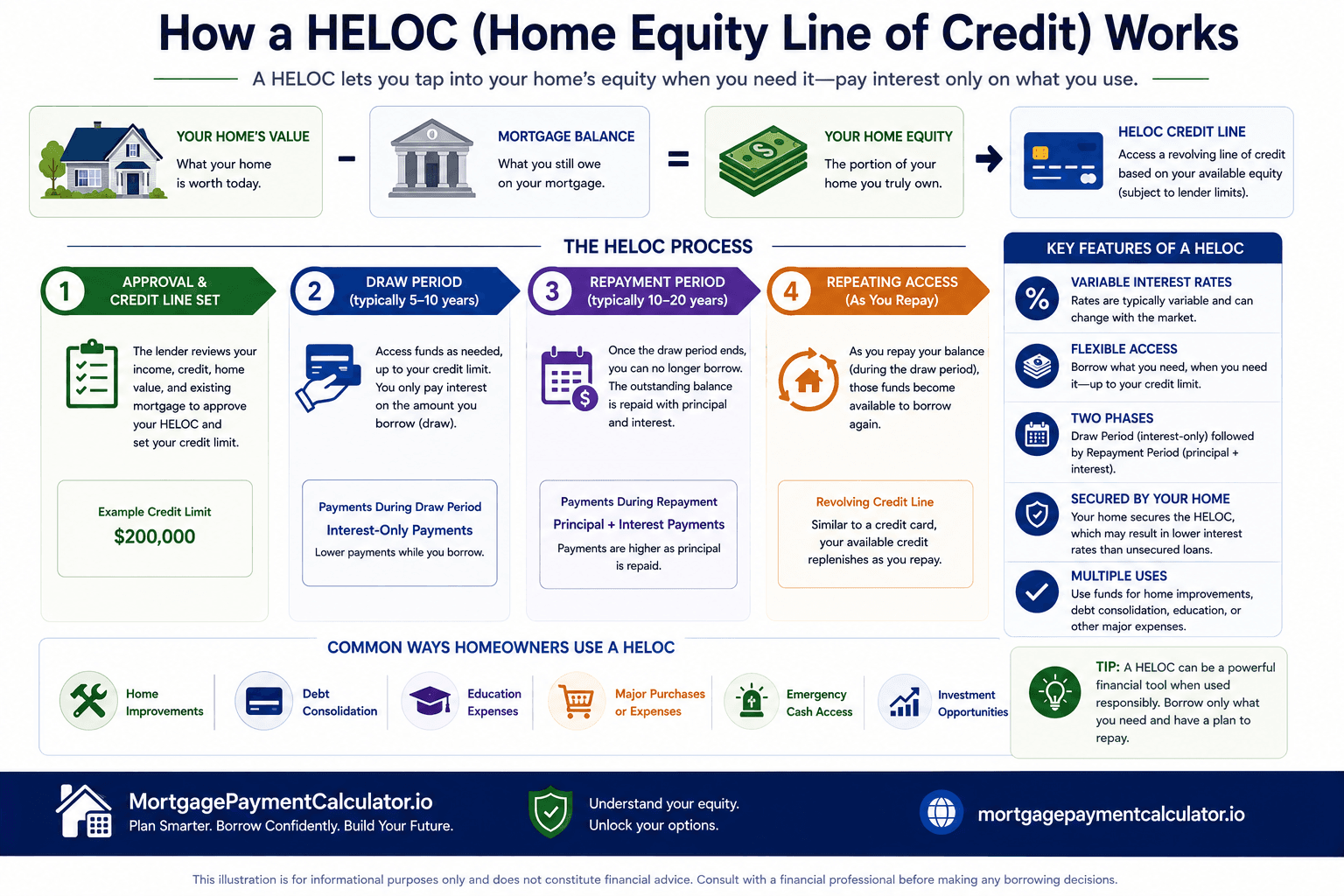
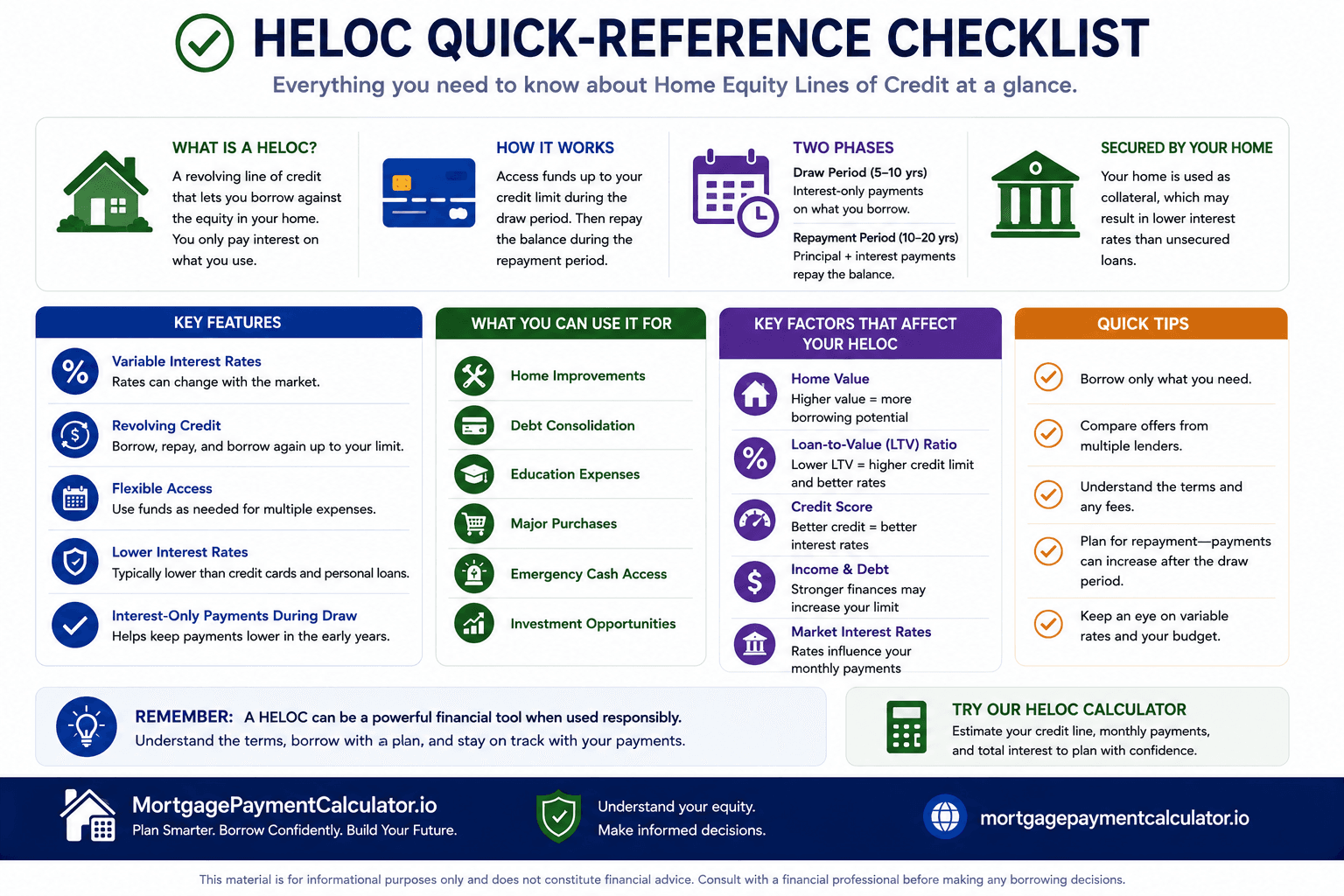
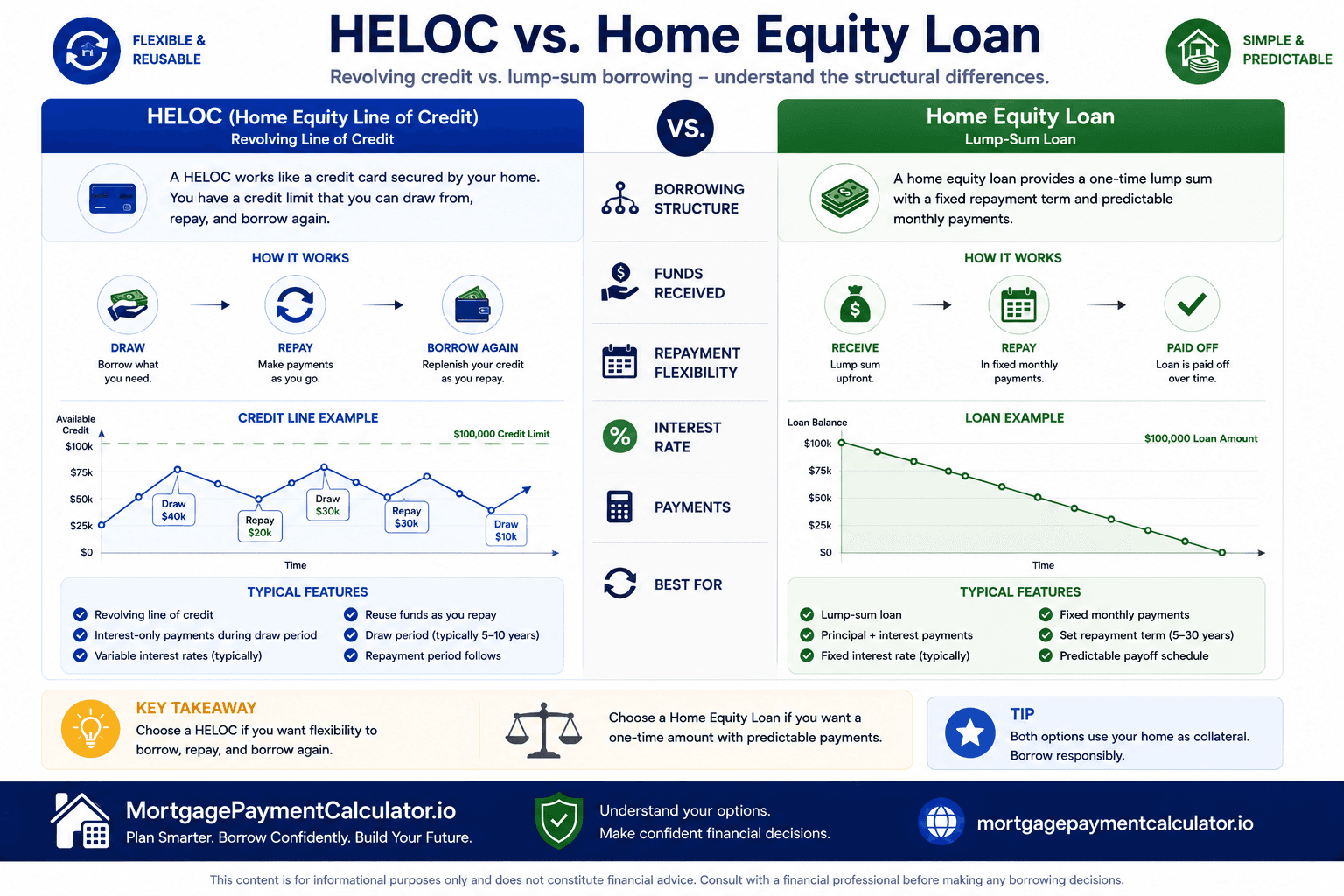
It's essential to distinguish between a home equity loan and a home equity line to make informed financial decisions using the equity built up in your home. A home equity loan provides borrowers with a lump sum of money, while a home equity line, often referred to as a HELOC, offers flexibility through a revolving credit line with variable interest rates. When you tap into your home equity, it's crucial to understand how the interest rate impacts your payments. With both a traditional home equity line and a home equity loan, lenders assess your home's value to determine your borrowing capacity, using the loan-to-value ratio as a guide. This helps establish the credit line you can access via an equity line. By keeping an eye on interest rates, you can manage your overall financing costs effectively. Whether you're considering a HELOC or a fixed-rate home equity loan, assessing the costs and benefits of each option is vital. If you're using our MortgagePaymentCalculator.io HELOC Calculator, you'll find it easier to explore how different options might fit your needs. Read through the information carefully, and compare rates to make the best choice for leveraging your home equity. By understanding these tools, you'll make calculated decisions when securing funds through an equity line or a loan and manage your home's mortgage efficiently.
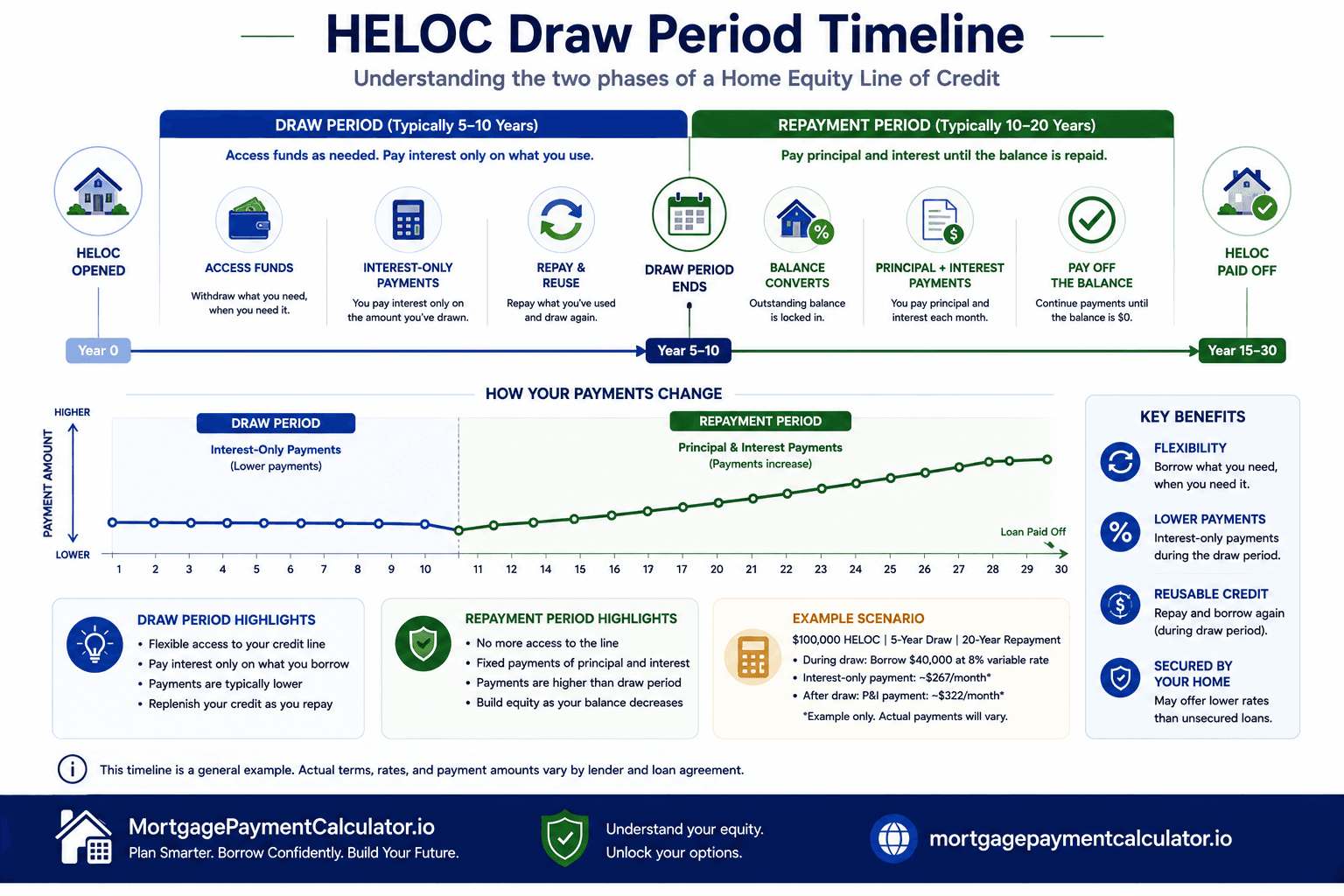
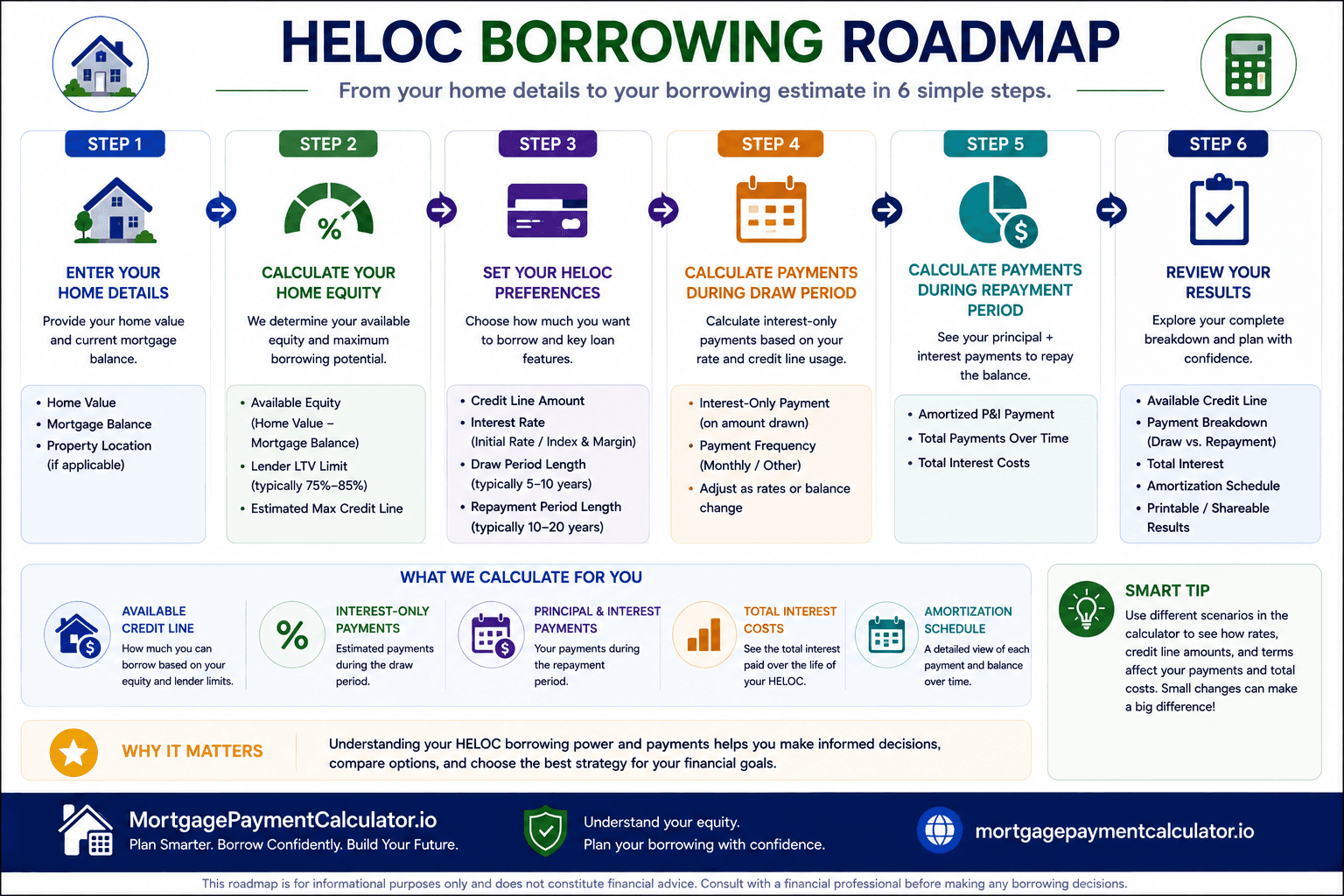
A home equity line of credit (HELOC) lets homeowners tap into their home equity to access a flexible credit line. It operates primarily in two stages: the draw period and the repayment period. During the draw period, borrowers can withdraw from the available credit for expenses like home improvements, debt consolidation, or education. Typically, only interest payments are required during this phase, making it an interest-only HELOC. However, be cautious, as rates may vary, impacting monthly costs. Checking your current credit standing can help secure better rates. As the draw period ends, the repayment period begins, where borrowers repay both principal and interest. It's crucial to understand the transition between these periods to avoid financial surprises. Estimating potential borrowing involves checking your home's current value and the remaining mortgage balance, impacting your available credit line. A low loan-to-value ratio means more credit. Reading your loan's terms will shed light on loan term specifics, including whether rates are fixed or variable. Knowing how to calculate these rates and their effect on monthly payments provides a clearer financial picture. Estimating these elements accurately can guide smart financial decisions and prevent over-leveraging. Understanding these HELOC dynamics can help you better prepare for future costs and obligations, ensuring you maximize the benefits of home equity financing.
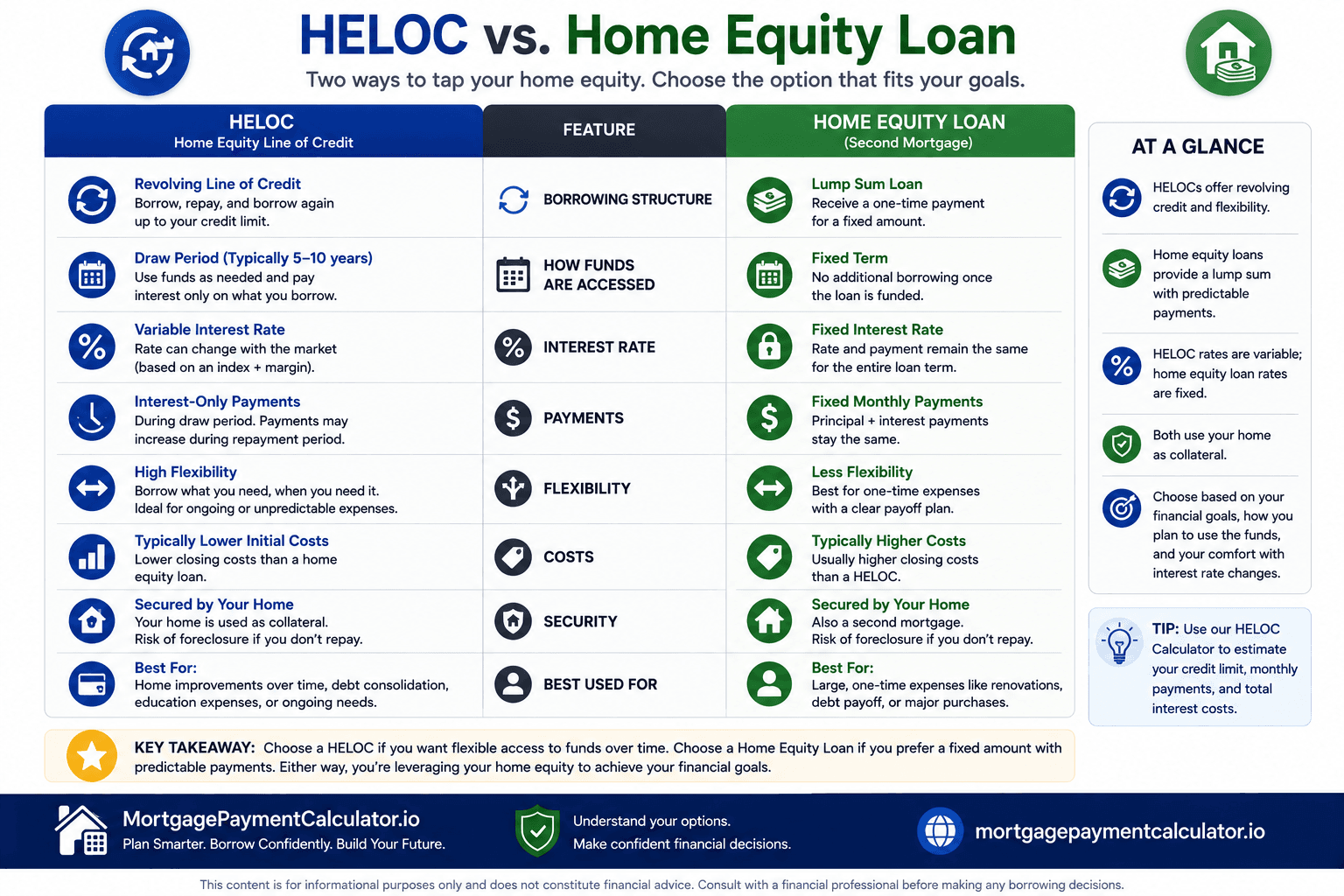
Understanding the differences between a home equity line of credit and a home equity loan can greatly impact your financial decisions. A home equity loan provides a lump sum with a fixed interest rate and a predictable repayment schedule. This is ideal for homeowners who prefer a traditional approach with fixed monthly payments and a set repayment period. On the other hand, a home equity line of credit offers flexibility, with a credit line allowing you to borrow as needed. Unlike home equity loans, the interest on a HELOC is variable, which means your monthly payments during the draw period can fluctuate based on mortgage rates. During the repayment period of a home equity line, you'll need to be prepared for changes in mortgage rates, as they will affect your repayment schedule and overall costs. Comprehending the distinction between these loans helps you align your future goals with the benefits of your chosen product. If your priority is a fixed repayment period and a set interest rate, a home equity loan may suit you best. However, if you value the flexibility of accessing funds as you need them, a home equity line could be the better fit. Both options utilize the home equity you've built, making informed decisions vital for harnessing borrowing power effectively.
Use this calculator to fully comprehend the benefits and potential financing you can secure through a Home Equity Line of Credit. Our HEL calculator is a powerful tool that acts as a credit payment calculator and an equity calculator, giving you the ability to estimate monthly home equity payments with accuracy. By understanding your home’s mortgage balance and leveraging the tools provided, you can make informed decisions about your personal finances. When you connect your personal account to check your current mortgage situation, our calculator helps you with precise calculations. Your home's value and remaining mortgage balance are pivotal in calculating your available borrowing power. Consider the draw period, as our calculator estimates costs during this phase, allowing you to plan your finances effectively. Checking various interest rates and repayment terms within the calculator empowers you to compare potential scenarios, ensuring that you choose the best options for your situation. It’s crucial to read and understand how differing factors such as loan-to-value ratios affect your available credit. By using our HELOC calculator, you gain valuable insights into the implications of various financial decisions. Discover the impacts on your account, check total interest, and verify all costs, so you’re well-prepared to navigate the complexities of home equity loans with confidence, foreseeing payments and adapting to your mortgage needs effortlessly.
To use this calculator effectively, understanding how each feature interacts with your financial data is crucial. Start by inputting your current mortgage balance and estimated home value into the mortgage equity calculator. This will estimate your available borrowing power by determining the loan-to-value ratio, which directly influences your credit line. Adjust the interest rate settings to see how potential changes in mortgage rates can affect your monthly cost. By doing this, you'll gain insight into how variable interest rates might impact your draw period payments and overall interest rate expenses. Keep in mind that the calculator also helps in estimating your total monthly cost by considering both principal and interest payment components. Utilize its settings to compare various interest rate scenarios, helping you plan for different financial environments. As mortgage rates fluctuate, this tool is invaluable in estimating what your future payments could look like, making it an effective part of your financial planning. Don't overlook the way the equity calculator presents your results, offering a visual representation of your potential debt obligations. By entering accurate data, the calculator also assists in projecting how changes in home equity affect your borrowing capacity. Use the results to inform discussions with your lender, effectively equipping you with data-driven insights for loan applications. Ensure you frequently update the calculator with the latest mortgage rates for optimal accuracy.
To make the most of our HELOC Calculator, using accurate inputs is essential for obtaining precise estimations of your borrowing potential and monthly payments during both the draw and repayment periods. Begin with your home's current market value and your remaining mortgage balance. These figures help determine your total home equity, which is crucial for estimating how much of an equity line you may qualify for. Next, enter the amount you're considering for your HELOC. This input helps the calculator assess your monthly payment structure. Providing an accurate interest rate is also vital, as it influences your monthly payments and overall borrowing costs. Additionally, understanding the loan-to-value ratio is necessary as it affects your available credit line. Each input has a specific role in estimating the amount you can borrow and ensuring the accuracy of your calculations. Ensure you carefully review and input each figure, as this directly contributes to precise estimates for your HELOC, including monthly payments. Taking the time to provide accurate information makes the helec estimation process efficient and effective. Additionally, understanding each amount within the context of the HELOC can provide valuable insight into your borrowing power and financial readiness. Our calculator simplifies complex financial concepts, allowing you to confidently assess your options and make informed decisions regarding your home equity line.
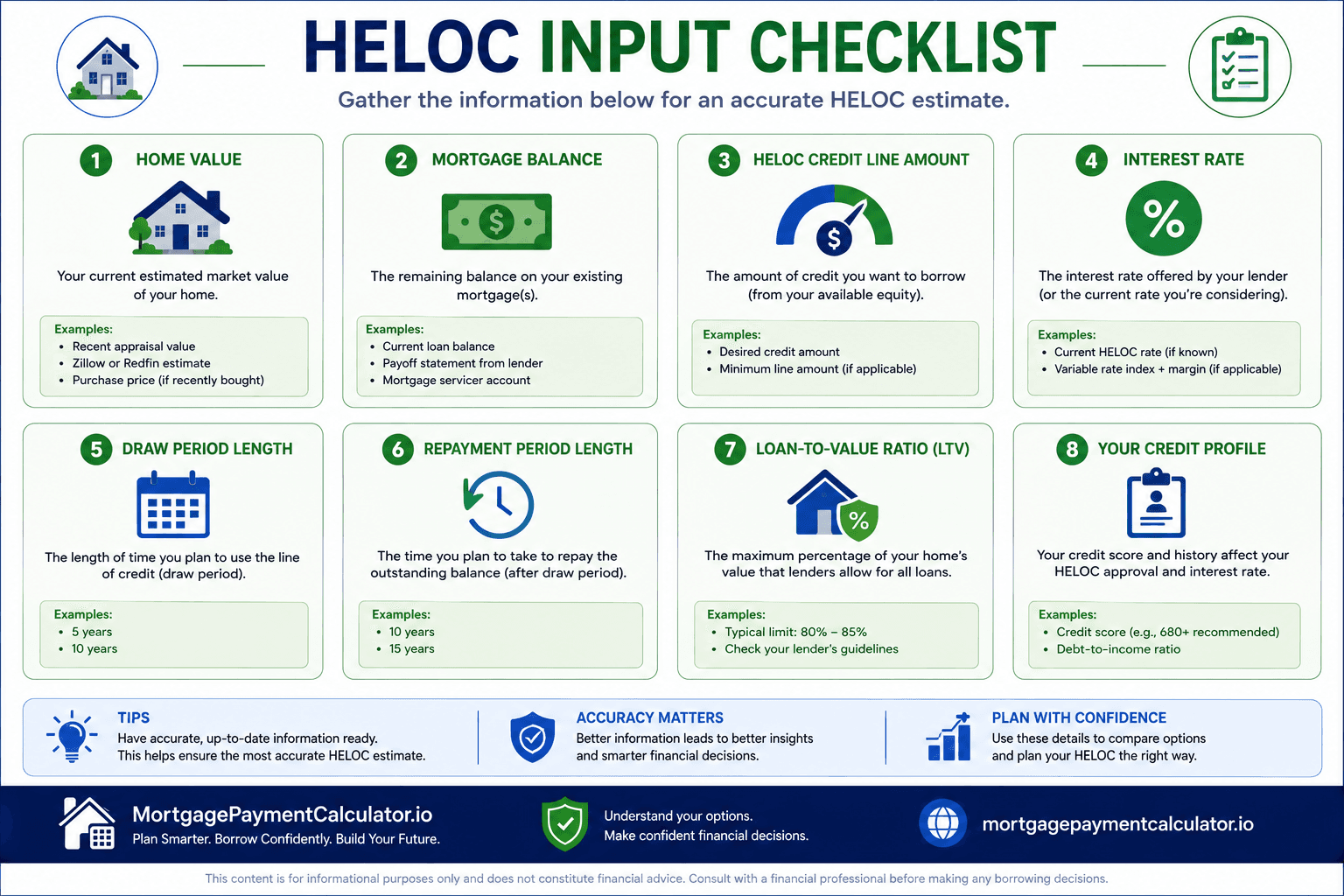
Continue to enhance your understanding of the HELOC estimation process with the following practical tips:
By following these steps, you'll enhance the accuracy and effectiveness of your HELOC estimations.
To assess your borrowing capacity with a Home Equity Line of Credit (HELOC), it's crucial to understand how your home's equity and the remaining mortgage affect your available credit line. By using MortgagePaymentCalculator.io’s HELOC calculator, you can estimate monthly home equity payments during the draw period, as well as the repayment phase. This tool provides insights into how the loan term will impact your monthly payments and overall costs. The calculator takes into account the amount you wish to borrow, the rate, and your home equity to offer a tailored estimate of your borrowing limits.
During the draw period, the calculator helps you understand how the amount, interest rate, and equity line are calculated to determine your credit line. The system also assesses the amount of remaining mortgage to give a precise estimation. By inputting your loan term details and interest rate, you can evaluate how the values affect your equity line, borrowing capacity, and monthly payments. This understanding will guide you in choosing an appropriate amount and calculating the costs associated with different scenarios, ensuring you're making informed decisions about your home equity. Understanding your mortgage, rate fluctuations, and draw period specifics can significantly enhance your planning and financial strategy, providing a clear view of your available credit line and borrowing capacity.
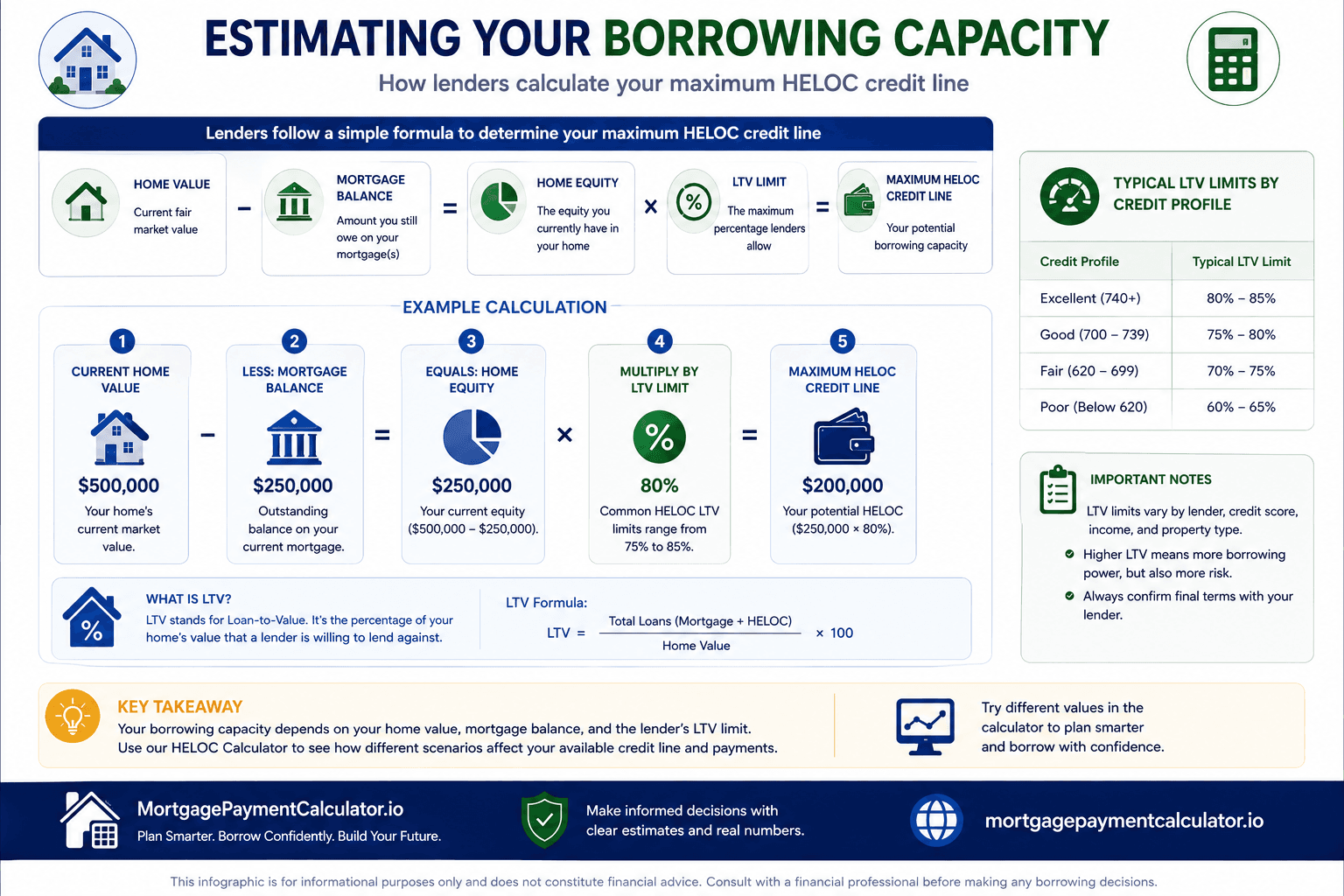
When assessing your home equity and available credit for a Home Equity Line of Credit (HELOC), it’s crucial to understand how your home equity and loan-to-value ratio play pivotal roles. Home equity is the difference between your home’s market value and the outstanding balance of all liens on the property, primarily your mortgage. Accurately estimating your available credit through a HELOC begins with a thorough assessment of your home equity. The loan-to-value ratio, which is the percentage of your home's value that is mortgaged, affects the credit line amount you can access. Typically, lenders offer a credit line that doesn’t exceed 85% of your home’s value minus the remaining mortgage balance. Using our HELOC calculator allows you to estimate exactly how much credit you could secure. An essential part of this process involves analyzing your current interest rate against potential HELOC rates. By assessing these rates, you can better gauge the cost of borrowing. The interest rate on your HELOC can affect both your monthly payments and the overall borrowing costs during the draw period and beyond. Ultimately, careful evaluation of your home equity and available credit ensures you make informed decisions about pursuing a Home Equity Line. Empower yourself with effective estimation tools and guidance, so you’re not only prepared but confident in your financial strategy.
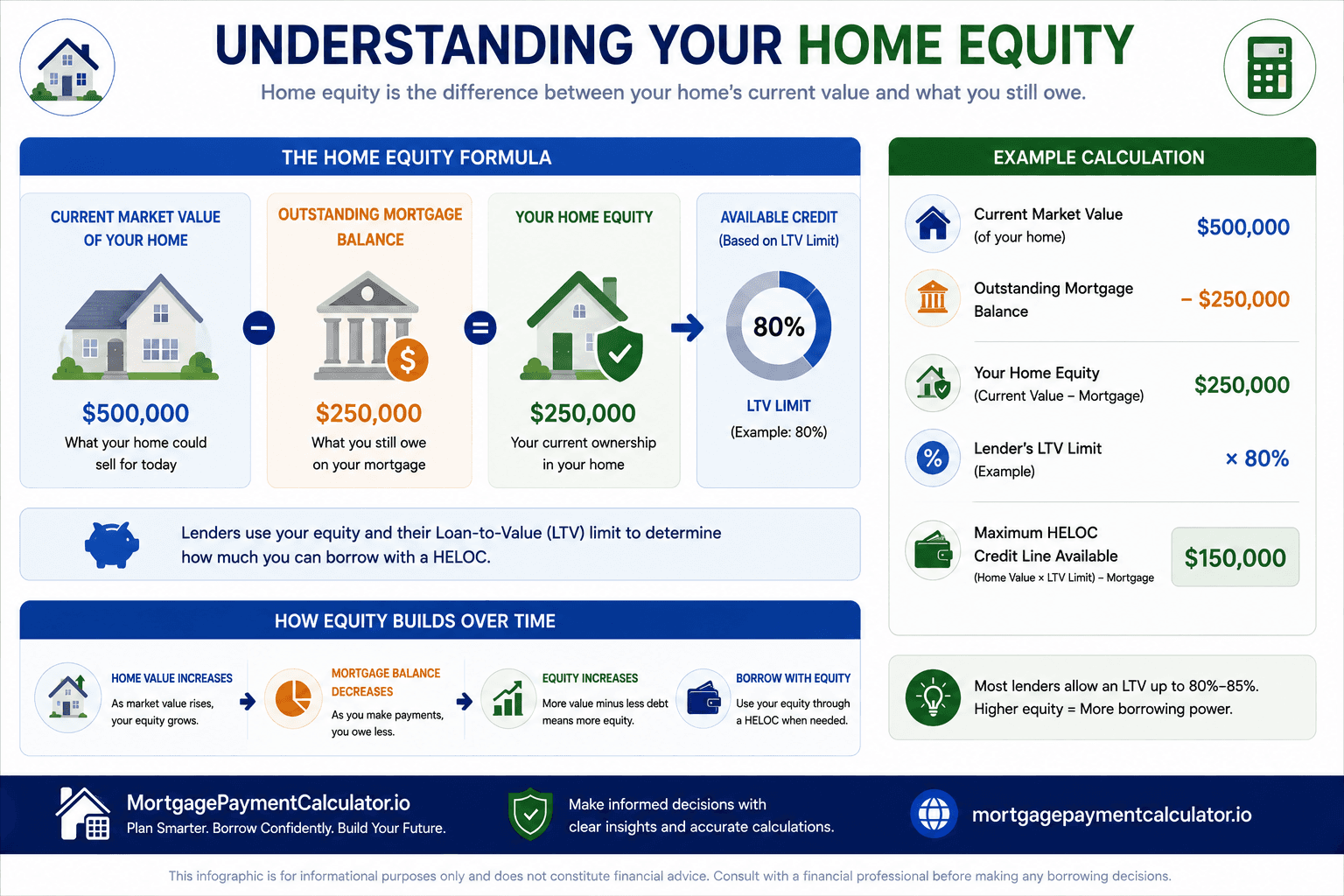
The loan-to-value ratio is a crucial factor when determining your available credit line for a home equity line of credit. This ratio compares your outstanding mortgage loan to the current market value of your home, considerably influencing the amount you can borrow. A lower loan-to-value ratio means you have more equity, which might result in a larger equity line. Conversely, a higher loan-to-value ratio could limit your credit line, impacting the terms and amounts you can access. Your credit line and loan term are directly influenced by this ratio, affecting interest rate offers and repayment periods.
A favorable loan-to-value ratio typically leads to more predictable repayment schedules and better interest rate conditions, reducing overall borrowing costs. As you consider your options, assess how each loan, interest rate, and repayment term fits your financial situation. The draw period of your equity line is also affected, as this stage determines how much of the line you can use initially based on your loan's terms. During the draw period, the loan amount you access will be contingent on the available credit reflecting your loan-to-value ratio. Understanding this ratio's impact helps in planning your equity line utilization, ensuring you align your borrowing with repayment capacity and manage interest rates effectively throughout the loan's life.
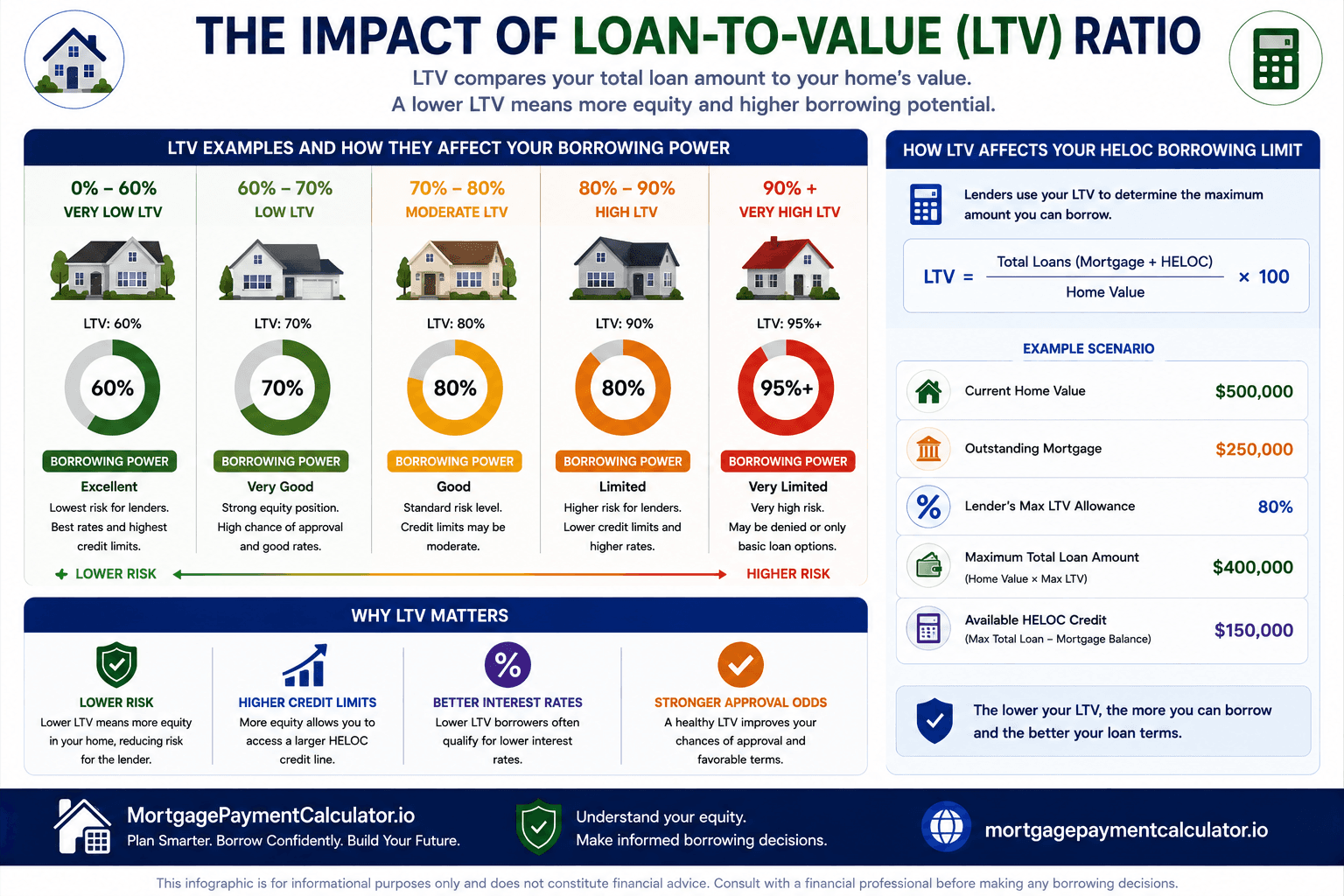
Diving into the nitty-gritty of costs and payments associated with a Home Equity Line of Credit (HELOC) is essential for any borrower. During the draw period, you can access available funds based on your equity. Knowing the amount you can borrow and the corresponding monthly payment is vital. Monthly cost considerations begin with understanding the interest rate that defines your payment obligations both in the draw and repayment phases. A predictable repayment schedule ensures you’re financially prepared for any rate fluctuations over the loan term.
Your mortgage's rate influences not only the interest rate you’ll get but also your overall costs. Analyzing the amount you'll pay in interest during the repayment term is crucial to gauge your HELOC's true financial impact. Various factors, including the existing mortgage balance and loan term, play into calculating your monthly cost. However, understanding your rate, both fixed and variable, will provide insight into how your payment might change. Managing a helical strategy heavily depends on this understanding.
Planning your payment amount throughout the loan term ensures you won’t be surprised by fluctuations. Mortgage calculators can help predict these expenses. Overall, knowing the costs associated with both the draw period and repayment is key to navigating a HELOC smoothly. By comprehending the nuances of interest rate influences and your tailored repayment schedule, you can effectively manage your mortgage-related financial plans and make informed decisions tailored to your financial situation.
Understanding how to navigate fluctuating mortgage rates is crucial when calculating your HELOC's interest rates and payment amounts. At MortgagePaymentCalculator.io, we provide a comprehensive tool for estimating these factors, ensuring you make informed decisions. The interest rate you secure is pivotal in determining your monthly payment, influencing the overall cost throughout the repayment and draw period. When calculating what you’ll owe, it's essential to compare variable and fixed rates, as each option uniquely affects payment consistency and overall expense. Estimating monthly payments involves considering both your credit standing and current mortgage rates, which can fluctuate and impact the cost structure significantly. By using our HELOC calculator, you can effectively calculate the interest rate scenarios and payment amounts, ensuring you’re prepared for potential rate changes. Don’t overlook the significance of interest rates on the total cost; even small shifts in rates can drastically alter your financial obligations. The monthly payment during the draw period might be influenced by promotional rates, but understanding the eventual fixed rates helps in long-term planning. Track and calculate cost implications by comparing different interest rate scenarios to foster a clearer financial outlook. Whether fixed or variable, every rate choice impacts your overall loan strategy, prompting the need to estimate all future expenses. With this knowledge, you're better equipped to handle your home equity financing wisely, using our tools to gauge loan dynamics efficiently.
| Loan Phase | Key Cost Components | Influencing Factors | Calculation Tools |
|---|---|---|---|
| Draw Period | Interest Rates, Monthly Payments | Variable Rates, Promotional Rates | MortgagePaymentCalculator.io for payment estimation |
| Repayment Period | Principal and Interest Payments | Fixed vs. Variable Rates, Existing Mortgage Balance | MortgagePaymentCalculator.io for interest rate scenarios |
This table concisely highlights the financial dynamics associated with HELOCs, illustrating the interplay between different loan phases, cost components, influencing factors, and the necessary tools to manage these elements effectively.
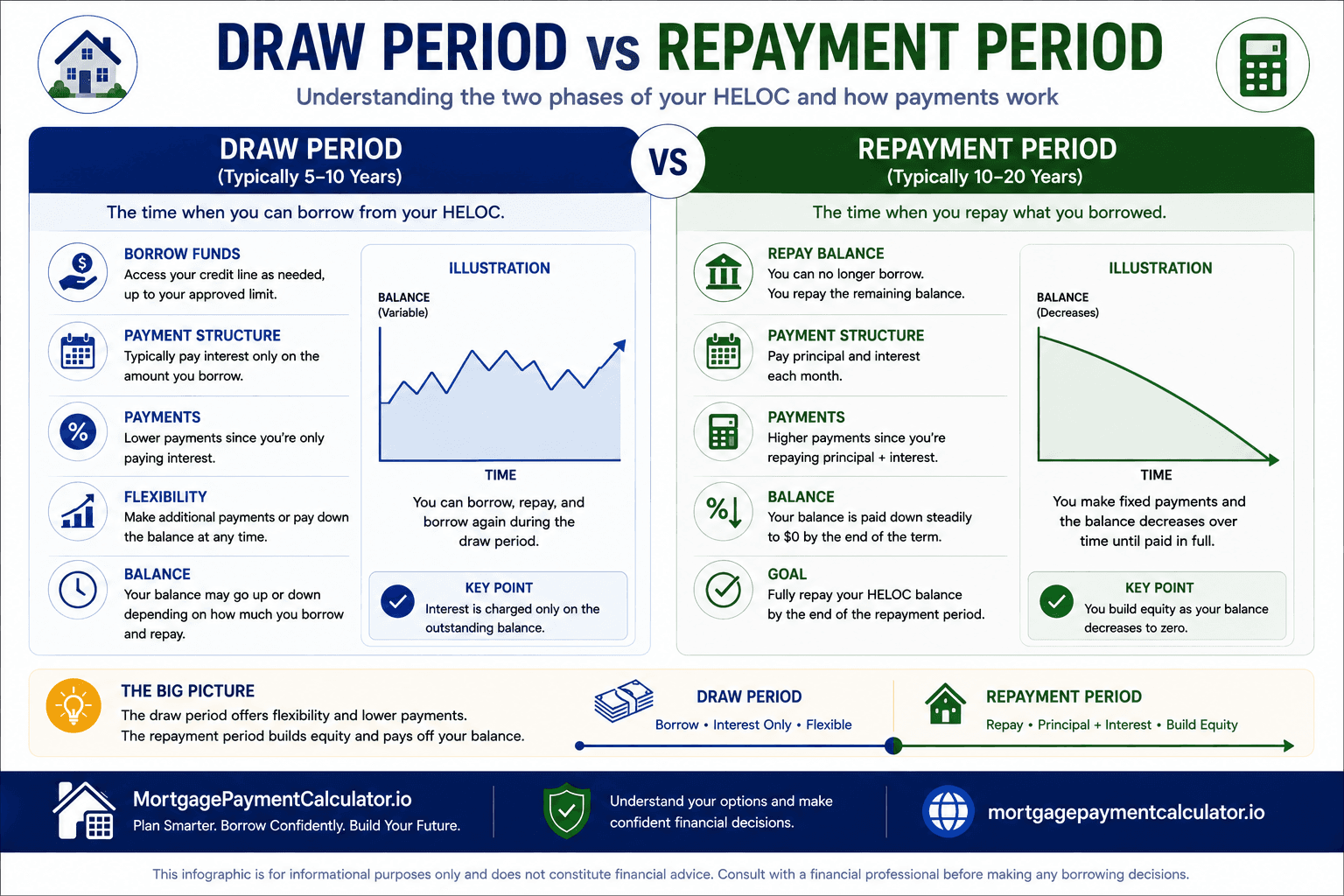
When considering a Home Equity Line of Credit (HELOC), understanding the costs during the draw period is essential for effective financial planning. During the draw period, borrowers typically make monthly payments that often consist of interest-only payments. This interest-only HELOC period allows for flexibility, as borrowers aren't required to pay toward the principal balance of the loan during this time. It's crucial to note, however, that while the draw period provides some breathing room with lower monthly payments, the rate you're committed to plays a significant role in determining the overall expense of the HELOC. As these costs don't reduce the principal balance, they can add up over the draw period. Furthermore, since HELOCs are variable-rate loans, the rate may fluctuate, potentially impacting your financial obligations. Carefully evaluating the loan's terms and calculating potential changes in interest rates can help you manage your budget more effectively. After the draw period, you'll enter the repayment period, where costs typically increase as you begin to repay both the principal and interest. This transition from the draw period to the repayment period demands a thorough understanding of your HELOC's terms. By assessing how these costs and periodic fluctuations due to rate changes affect your financial situation, you can make informed decisions about your mortgage and credit strategies with the help of MortgagePaymentCalculator.io, which empowers you to evaluate and explore your options in a data-driven and practical manner.
In conclusion, leveraging a Home Equity Line of Credit can be a strategic move for funding home improvements, debt consolidation, or other financial needs. Use the MortgagePaymentCalculator.io HELOC Calculator to determine your potential borrowing power, understand your monthly payment obligations, and assess total interest costs. By inputting your home's value, mortgage balance, and desired HELOC amount, you'll gain a comprehensive view of your financial possibilities. Make informed decisions with confidence, knowing how these variables impact your borrowing strategy, and manage your finances effectively with MortgagePaymentCalculator.io guiding your way.
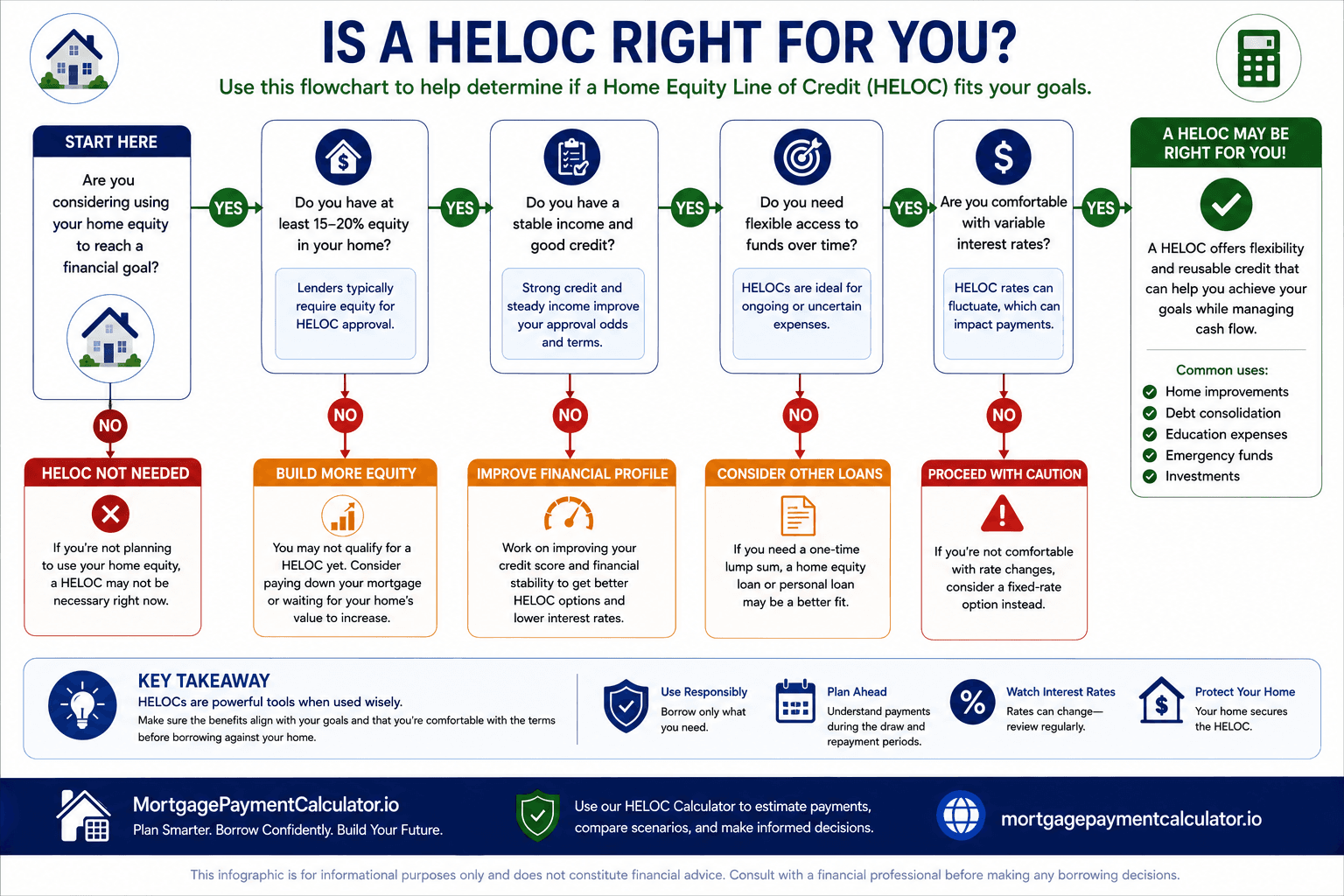
A Home Equity Line of Credit (HELOC) is a revolving line of credit secured by the equity in your home. It allows homeowners to borrow money up to an approved limit for a certain period, known as the draw period. During this time, you typically make interest-only payments on the amount you borrow. After the draw period ends, you enter the repayment period, during which you pay back both principal and interest.
The HELOC Calculator helps you estimate your available credit line, monthly payments, and total interest costs based on your home's value and current mortgage balance. By inputting accurate data, you can plan your financial strategy effectively, comparing options for debt consolidation, home improvements, or major purchases.
A home equity loan provides a lump sum of money with a fixed interest rate and repayment schedule. In contrast, a HELOC offers flexibility with a revolving credit line and variable interest rates, allowing you to borrow as needed during the draw period. Understanding these differences will help you determine which option best suits your financial situation.
The loan-to-value (LTV) ratio compares your outstanding mortgage balance to your home's current market value. A lower LTV ratio indicates more equity, allowing for a larger available credit line and potentially better interest rates. This ratio is essential in determining your borrowing capacity with a HELOC.
During the draw period, focus on understanding your interest-only payment obligations and how variable interest rates could impact your monthly costs. It's crucial to assess how much you plan to borrow and recognize that while payments may be lower initially, they will increase once the repayment period begins.